Fuel Types and Running Costs
Are Electric Range Cookers Expensive to Run? £124

By the Hill & May team
Updated 2026
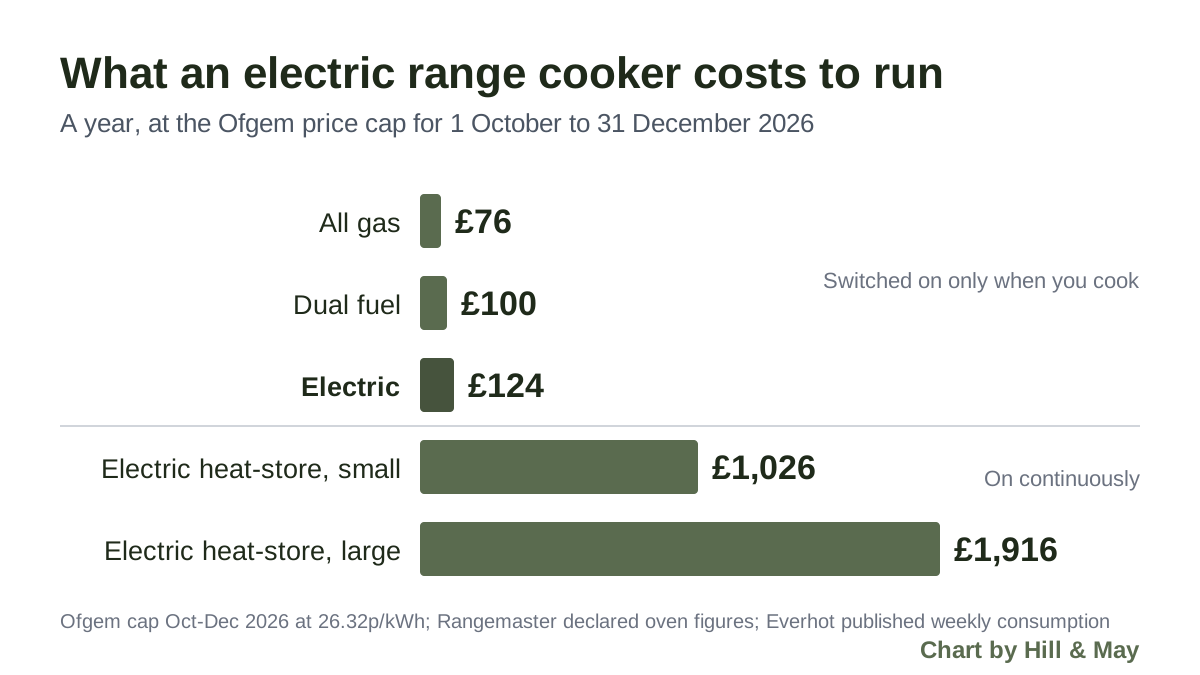
Are electric range cookers expensive to run? No. A conventional 110cm electric range cooker costs roughly £124 a year, about £2.40 a week, at the October 2026 price cap. The reason so many people believe otherwise is that two completely different appliances share the name, and one of them really does cost over a thousand pounds a year. Work out which one you are actually asking about and the question answers itself.
All figures use the Ofgem price cap for 1 October to 31 December 2026, direct debit, averaged across England, Scotland and Wales: 26.32p per kWh for electricity, with a standing charge of 54.83p a day that you pay whether you cook or not.
Two appliances, one name
This is the whole confusion, so it is worth being blunt about it.
A conventional electric range cooker is a wide freestanding cooker with electric ovens and a ceramic or induction hob. Stoves Richmond, Rangemaster Classic, Belling Farmhouse, Leisure Cuisinemaster. It is off until you switch it on, exactly like any other oven. It costs about £124 a year.
A heat-storage cooker is a cast iron appliance that stays hot continuously. An electric Everhot, or an electric AGA. It is drawing power around the clock to hold two or three cast iron ovens at temperature. Depending on the model, that is between £1,026 and £1,916 a year.
Both are electric. Both are range cookers. The gap between them is eight to fifteen times, and it has nothing to do with how much you cook. Almost every worried search about electric running costs is really a search about the second kind. Our AGA running costs page covers those in full.
The rest of this page is about the conventional kind.
What it actually costs
Rangemaster publishes the declared energy-label consumption for its Classic 110, and the electric ovens in the ceramic, induction and dual fuel versions use 0.83 kWh per test cycle.
At 26.32p, that is about 22p every time you run the oven. A Sunday roast, a tray of chips, a batch of scones: 22p each.
Run the oven five times a week, 260 times a year, and you get:
| Energy a year | Cost a year | |
|---|---|---|
| Electric oven | 216 kWh | £57 |
| Ceramic or induction hob | roughly 255 kWh | £67 |
| Total | £124 |
A conventional electric range is the most expensive of the ordinary fuel choices, but the spread is narrow. An all-gas range is around £76 and a dual fuel around £100, so the worst case is about £48 a year worse than the cheapest. That is under a pound a week. Our full range cooker running costs breakdown shows the working for all four.
If a £48 difference is deciding your cooker, you are optimising the wrong variable. Hob performance, oven capacity and how the thing is to live with will matter far more over fifteen years.
Electricity is temporarily cheap, and that will change
There is no VAT on domestic electricity between 1 October 2026 and 31 March 2027. Gas still carries VAT at 5 per cent. So the 26.32p above is flattering electric cookers right now, and the comparison will shift against them in the spring when the holiday ends.
If you are buying this autumn, do the sums twice: once at today’s rate, once assuming electricity goes back up by about 5 per cent. On a £124 bill that is roughly £6 a year. It does not change the answer. It is just worth knowing that any running-cost page written before October is quoting a different, higher electricity rate than this one.
The 15kW number that frightens people
Look up the specification of an electric range cooker and you will find something alarming. The Stoves Richmond Deluxe S1100Ei lists a total electrical loading of 15.53kW. Rangemaster’s Classic 110 electric manual gives a total load of around 14.6kW.
Fifteen kilowatts at 26.32p is nearly £4 an hour, which is where the “electric ranges are ruinous” belief comes from.
It is not what happens. That figure is the sum of every element on the appliance at once: both ovens, the grill, all the hob zones, at maximum, simultaneously, forever. No one cooks like that. The ovens cycle their elements on and off to hold temperature, the hob zones run at a fraction of full power once something is simmering, and you are almost never using all of it at the same time.
The wiring rules assume exactly this. Both of those cookers are specified for a 32 amp supply, which at 230V could only carry about 7.4kW continuously. BS 7671 allows it because the diversity calculation in Appendix 15 recognises that a cooker’s realistic sustained draw is a long way below its nameplate. Rangemaster asks for a 32 or 45 amp supply depending on model.
Treat the nameplate as the electrician’s number, not yours.
The installation cost nobody quotes
This is the genuine extra expense of going electric, and it is a one-off rather than a running cost.
An electric range cooker cannot go on a 13A plug. It needs a dedicated radial circuit, typically 6mm² cable on a 32A or 40A breaker, terminated at a cooker connection unit near the appliance. If your kitchen already had an electric cooker, that circuit exists and you are fine. If you are replacing a gas range with an electric one, you are paying an electrician to run a new circuit from the consumer unit, and possibly to upgrade the consumer unit itself.
Budget for that before you compare £57 against £33 of annual oven cost, because the installation will swallow a decade of the difference in one afternoon. Check the circuit before you order, not after it is delivered.
Time-of-use tariffs make this worse, not better
Here is the part that other pages get backwards. Electric appliances are usually the ones that benefit from a smart tariff, because you can shift them into a cheap window. A cooker is the exception, because you cannot shift dinner.
Take Cosy Octopus, a common heat-pump and electrification tariff. It has three cheap windows, 04:00 to 07:00, 13:00 to 16:00 and 22:00 to midnight, priced 51 per cent below the day rate. It also has a peak window from 16:00 to 19:00, priced 50 per cent above the day rate.
Sixteen hundred to nineteen hundred is when most households cook their main meal. So a tariff sold on making electricity cheaper puts your oven in its single most expensive slot, every single day. If all your cooking landed inside that peak, a £124 year becomes roughly £186.
Octopus Go has the same problem in a different shape. Its cheap window runs 00:30 to 05:30, which is no use at all for cooking.
None of this means avoid smart tariffs. If you have an EV or a heat pump, the savings there dwarf the cooking penalty. It does mean that if you are on a time-of-use tariff and you are trying to cut cooking costs, the lever is eating earlier or later, not buying a different cooker. Batch cooking inside the 13:00 to 16:00 window and reheating is the version of this that people actually stick to.
Four things that cut the bill more than the fuel choice
Use the small oven. Almost every 100cm and 110cm range has a second, smaller cavity. Heating 60 litres instead of 120 for a single tray is the biggest single saving available, and it costs nothing to adopt.
Switch off early. A fan oven holds useful heat for a good ten minutes. Cutting the last ten minutes off a 45 minute bake saves about a fifth of the energy for that cycle with no change to the result.
Choose induction over ceramic if you use the hob hard. Induction puts heat into the pan rather than into the ceramic and the kitchen, so it boils faster and wastes less. The saving is modest on the annual total, but it is real and it comes with a better hob. See ceramic vs induction range cookers.
Stop preheating things that do not need it. Chips, jacket potatoes and anything roasted for over 40 minutes are fine from cold. Preheating an empty 120 litre oven is the purest waste in the whole exercise.
So should you buy electric?
Buy electric if you have no mains gas, if the existing circuit is already there, or if you want an induction hob, which needs electricity anyway and is the best hob most people can buy. The running cost penalty against gas is under a pound a week and it is not worth reorganising a kitchen over.
Buy dual fuel if you have gas, cook on the hob constantly, and want the gas burners with the more even electric oven. That is the dual fuel versus electric trade in one sentence.
Think very hard before buying a heat-storage cooker on electricity, because that is where the real money goes, and it goes whether you cook or not.
Frequently asked questions
How much does it cost to run an electric oven for an hour? Roughly 20p to 30p. A typical range cooker oven has a 2 to 3kW element, but it only draws full power while heating up, then cycles to hold temperature. Averaged over an hour that works out near 1 kWh, so about 26p at the October 2026 cap rate.
Are electric range cookers more expensive to run than gas? Yes, by about £48 a year for a typical household. Gas costs roughly a third of electricity per unit, which outweighs the fact that gas ovens use around twice the energy to do the same job. In weekly terms the gap is under a pound.
Why is my electric range cooker using so much electricity? Usually the hob rather than the ovens, or a door seal that has gone. Check the seal by closing the door on a sheet of paper: if it slides out easily, the oven is leaking heat and working harder to hold temperature. Also check nothing is holding the oven on, such as a timer set to a long programme.
Is induction cheaper to run than a ceramic electric hob? Slightly. Induction heats the pan directly rather than heating a glass surface that then heats the pan, so less energy goes into the room. Expect a small annual saving rather than a dramatic one. The real argument for induction is speed and control.
Does an electric range cooker need its own circuit? Yes. It cannot run from a standard socket. It needs a dedicated radial circuit, normally 6mm² cable on a 32A or 40A breaker with a cooker connection unit. Confirm that circuit exists before you buy, since installing one is an electrician’s job and a real cost.
Is an electric AGA expensive to run? Very, compared with a conventional cooker. Electric heat-storage cookers run continuously and cost between roughly £1,000 and £1,900 a year depending on model and setting. That is the number people are usually thinking of when they ask whether electric range cookers are expensive.