Fuel Types and Running Costs
Ceramic vs Induction Range Cooker: 6 Zones or 5?

By the Hill & May team
Updated 2026
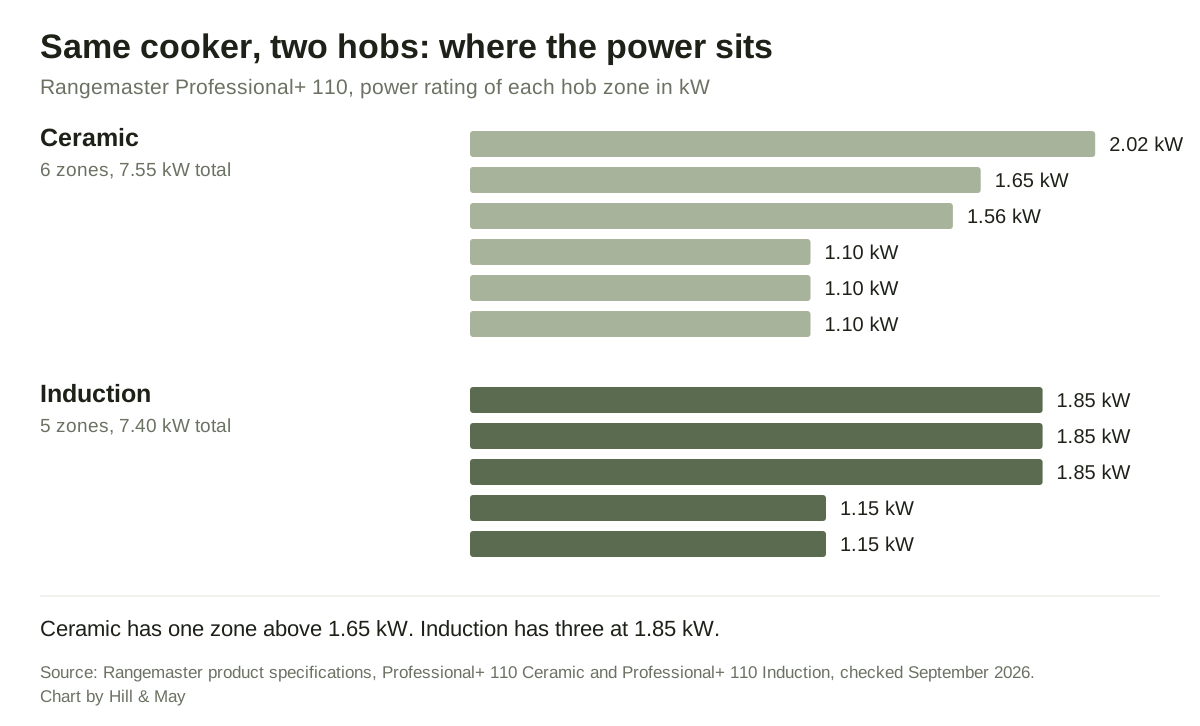
The ceramic vs induction range cooker decision is unusually easy to settle, because the manufacturers hand you the evidence. Rangemaster sells the Professional+ 110 as a ceramic model and as an induction model: identical cabinet, identical pair of electric fan ovens, identical 2.30 kW separate grill. Only the glass changes. So you can put the two specification sheets side by side and see exactly what the extra money buys, which is not what most comparison pages tell you it buys.
Both are electric. Both go on the same circuit. The running cost difference is real but small. What actually separates them is how the heat is distributed across the top, and whether your pans will work at all.
The two hobs, from the manufacturer’s own spec sheets
| Rangemaster Professional+ 110 | Ceramic | Induction |
|---|---|---|
| Hotplate zones | 6 | 5 |
| Zone powers | 2.02, 1.65, 1.56, 1.1, 1.1, 1.1 kW | 1.85, 1.85, 1.85, 1.15, 1.15 kW |
| Total hotplate rating | 7.55 kW | 7.40 kW |
| Power boost | No | Yes |
| Low temperature settings | No | 2 |
| Child lock | No | Yes |
| Hot hob indicators | Yes | Yes |
| Maximum electrical load | 16.03 kW | 14.84 kW |
Read the zone powers column twice, because that is the whole argument.
The ceramic hob has six zones and slightly more total power, which sounds like the better deal. But only one of its six zones is above 1.65 kW, and three of them are 1.1 kW, which is a simmer ring with ambitions. The induction hob drops to five zones and slightly less total power, yet three of those zones are 1.85 kW.
In practice that means the ceramic hob will boil one big pan quickly and make you wait on everything else. The induction hob will drive three pans hard at once. If you cook a roast dinner with potatoes, greens and a gravy pan all going, that is the difference you will notice every Sunday, and no marketing copy states it as plainly as the spec sheet does.
The induction model also gains a power boost, two dedicated low temperature settings for melting and holding, and a child lock. The ceramic gets none of the three.
Running cost: smaller than you have been told
Both hobs run on electricity, so this comes down to how much of that electricity reaches the pan.
Commonly measured figures put induction at up to about 90% efficient, because the pan itself is the heating element, and radiant ceramic at around 74%, because the element has to heat the glass, which then heats the pan, and the glass radiates heat into your kitchen on the way.
Under the Ofgem price cap for 1 October to 31 December 2026, a standard variable direct debit customer pays an average of 26.32p per kWh for electricity. Work through a real task rather than a vague annual figure:
Bringing one litre of water from tap temperature to the boil needs about 0.099 kWh of actual heat.
| Hob | Efficiency | Electricity drawn | Cost at cap rates |
|---|---|---|---|
| Ceramic | about 74% | 0.134 kWh | about 3.5p |
| Induction | about 90% | 0.110 kWh | about 2.9p |
Six tenths of a penny. Boil a litre twice a day every day of the year and induction saves you roughly four or five pounds. Across a whole hob’s worth of cooking the saving is bigger, but it is still tens of pounds a year, not hundreds.
So if a salesperson tells you the induction premium pays for itself in energy savings, do the arithmetic on the number of years that would take. It usually runs past the life of the cooker. Buy induction for the cooking, not the bill. Our range cooker running cost calculator will run your own usage figures if you want to check.
Your pans decide this before you do
This is the one that catches people out after delivery.
Induction only works with ferrous cookware, so cast iron, enamelled steel and stainless steel with a magnetic base are fine. Aluminium, copper and glass will not heat at all unless they have a magnetic plate bonded into the base. The test takes ten seconds: hold a fridge magnet against the bottom of the pan. If it grips firmly, the pan works. If it slides off, it does not.
Go through the whole cupboard before you order, not just the good pans. People remember the casserole and forget the milk pan, the small saucepan, the wok and the stovetop kettle. Replacing a full set is a genuine cost, and it belongs in the comparison.
Ceramic has no such requirement. Anything with a flat base works, including the pans you already own, which is a legitimate reason to choose ceramic that has nothing to do with the cooker.
One more pan detail specific to induction: the zone only heats the footprint of the base, so an undersized pan on a large zone may not trigger the zone at all. Ceramic will happily heat a small pan on a big ring, wasting energy but working.
Response, control and the bit ceramic does better
Induction responds like gas. Turn it down and the heat is gone, because you are switching off a magnetic field rather than waiting for a glowing element and a slab of glass to cool. For anything that catches, curdles or boils over, that matters.
Ceramic carries a lag in both directions. Turn it up and nothing happens for a while, then it all happens at once. Turn it down and the glass keeps delivering heat for a minute or two. Cooks used to gas find that infuriating; cooks used to old solid-plate electric find it a big improvement.
Ceramic has one honest advantage here, though, and it is rarely mentioned: residual heat is useful. A ceramic zone stays warm long after it is switched off, which is a free place to hold a sauce or keep plates warm. Induction gives you nothing once the pan comes off, beyond whatever heat the pan retained.
The other point in ceramic’s favour is noise. Induction hobs hum, and with a heavy multi-ply pan on boost they can buzz or rattle audibly. Some people never notice, some find it grating. Stand in front of one in a showroom on full power before you commit.
Installation: no difference, and that surprises people
There is a widespread belief that an induction range cooker needs a heavier supply than a ceramic one. On these cookers it does not.
Rangemaster’s own guidance states that ceramic and induction models “may be connected to a suitable 6mm cable with a 32-amp breaker (providing the isolator switch, which turns the power on and off to the cooker, does not incorporate a 13 amp socket)”, and that for greater flexibility they recommend a 10mm cable with a 45 amp breaker. Same advice, both hobs. Rangemaster adds that these are guidelines only and a qualified electrician has to do the calculation for your specific installation.
Look at the maximum electrical load figures in the table above and you can see why: the induction model actually draws less at full tilt than the ceramic one, 14.84 kW against 16.03 kW, because the induction hob’s diversity is built into fewer, harder-working zones. Our cooker cable size calculator covers what your existing circuit will carry.
If you are switching from a dual fuel cooker, the install question is different and larger. That one is covered in dual fuel vs electric range cookers.
Cleaning, marks and the long-term look
Both are flat glass, so both wipe down in seconds compared with pan supports and burner caps.
The difference is what happens to spills. On a ceramic hob the zone gets hot enough to bake sugar and milk onto the glass, and burnt-on sugar can pit the surface permanently if it is not scraped off quickly. On induction the glass only gets warm by conduction from the pan, so a boil-over usually wipes away rather than welding itself down. Over ten years, induction glass generally looks better.
Both are vulnerable to the same things: sliding cast iron across the surface, dropping a tin, and using an abrasive cream that dulls the finish. A proper hob scraper is the only tool either one needs.
Which to buy
Choose induction if you cook several things at once, you want the responsiveness of gas on an electric cooker, you have or are willing to buy magnetic pans, you have young children in the kitchen, or you are coming from gas and dread the lag. On the Professional+ 110 you are effectively trading one small zone for two extra high-power ones, and that is a good trade for most households.
Choose ceramic if your pan collection is copper, aluminium or a mixed inheritance you do not want to replace, if you cook one or two pans at a time and value having six places to put them, if the hum would bother you, or if the budget is better spent elsewhere in the kitchen. It is not a compromise so much as a different distribution of the same heat.
Neither if you want a hob that works in a power cut. Both are electric, both stop, and that is worth knowing before you sell the gas cooker.
For the wider picture on the electric side, see our induction range cooker guide and the electric cooker buying guide. For how the brand’s families line up, the Rangemaster range cooker guide sets out which models come in which hob.
Frequently asked questions
Is a ceramic or induction range cooker better? Induction, for most people who cook more than one pan at a time. On the Rangemaster Professional+ 110 the induction hob gives three 1.85 kW zones against ceramic’s single zone above 1.65 kW, plus a boost function, two low temperature settings and a child lock. Ceramic wins on pan compatibility and on having a sixth zone.
Does an induction range cooker cost less to run than a ceramic one? Slightly. Induction is about 90% efficient against roughly 74% for radiant ceramic, which at the October to December 2026 cap rate of 26.32p per kWh works out at around six tenths of a penny saved per litre of water boiled. Over a year that is tens of pounds, not hundreds, so it rarely justifies the price difference on its own.
Can I use my existing pans on an induction range cooker? Only the ferrous ones. Hold a magnet against the base: if it sticks firmly, the pan will work. Cast iron and most stainless steel are fine, plain aluminium, copper and glass are not. Check every pan including the small ones, because replacing a full set is a real cost.
Does an induction range cooker need a bigger electrical supply than ceramic? No. Rangemaster gives the same guidance for both, a 6mm cable with a 32 amp breaker as a minimum and 10mm with a 45 amp breaker recommended. On the Professional+ 110 the induction model’s maximum load is actually lower, 14.84 kW against the ceramic’s 16.03 kW. A qualified electrician still has to size it for your installation.
Why does my induction hob hum or buzz? The electronics switch at high frequency and the pan base can resonate with them, which is loudest on boost and with thin or multi-ply bases. It is normal and not a fault. Heavier, flatter pans are usually quieter, but if the noise would irritate you, listen to one running hard before you buy.
Do ceramic hobs scratch more easily than induction? The glass is similar, but ceramic zones get hot enough to bake spills onto the surface, and sugar in particular can pit it if left. Induction glass only warms through contact with the pan, so spills tend to wipe off. Both are damaged the same way by dragged cast iron and abrasive cleaners.