News
Gas Standing Charge Abolition: What It Means for Gas Ranges

Updated 2026
Wednesday’s Budget had three things in it for anyone running a range cooker: a plan to remove the daily standing charge from gas bills, a longer VAT holiday on electricity plus a £100 payment for most households in England, and a cut in the import tariff on heating oil. None of them changes your bill this week, so here is what each one does and when.
Gas standing charges to be abolished, aiming for the end of 2027
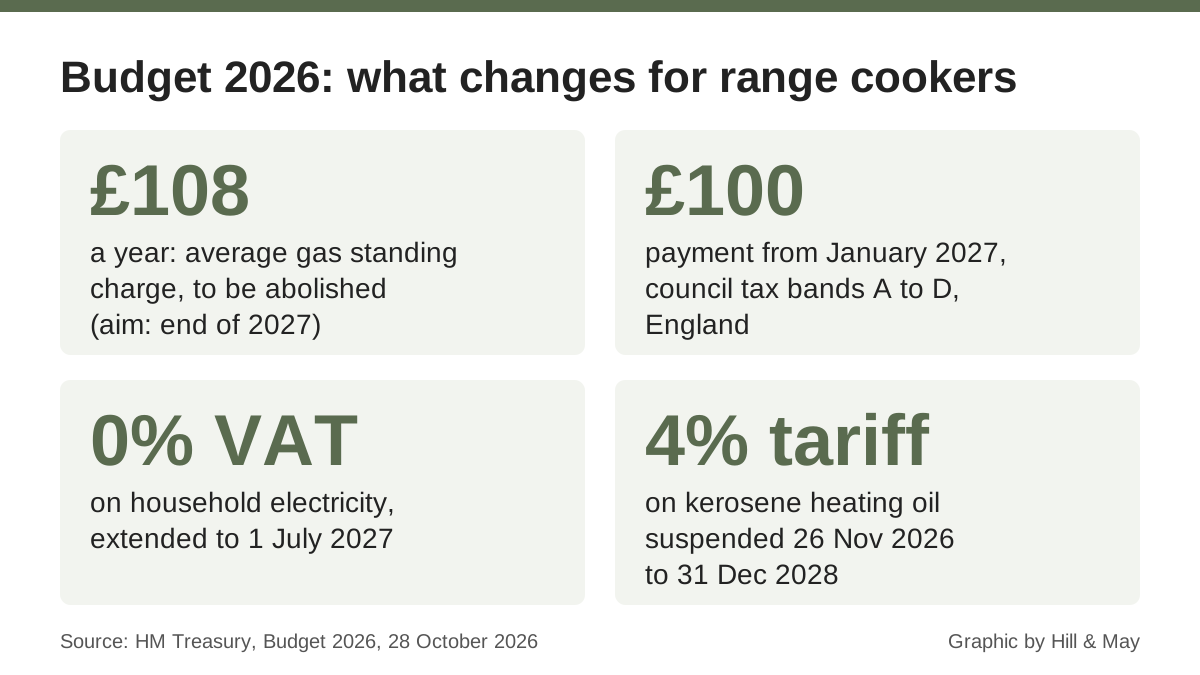
The government has asked Ofgem to abolish standing charges on household gas bills in Great Britain, “aiming for delivery by the end of 2027 or as soon as possible after then”, the Budget document published on 28 October 2026 says. It puts the current gas standing charge at £108 a year on average for a typical billpayer. The cost will move onto unit rates, so you pay for the gas you use rather than a fixed daily fee, and the government says the change will come with “targeted mitigations to ensure this is delivered fairly”. It also committed to reforming electricity standing charges, with details next year.
What it means for a cook: the households that gain most are those with a gas supply they barely use. If gas only feeds your hob or a dual fuel range, you are currently paying the full standing charge for a small amount of gas. Heavy users are a different case. A gas-fired AGA or range that runs all day, or a home heated by gas, will pay a higher unit rate on every kWh, and the Budget does not yet say what that rate will be, so the net effect is unknown until Ofgem sets it. Our range cooker energy price cap rates page has today’s unit rates and standing charges, and the range cooker running cost calculator shows how much of your bill is the cooker. Source: HM Treasury, Budget 2026.
£100 energy payment in England and VAT-free electricity to July 2027
From January 2027, households in council tax bands A to D in England will get a £100 Household Energy Payment, delivered through the council tax system. The Treasury says that is up to 20 million households, and that Scotland, Wales and Northern Ireland get funding to offer something similar. Councils in England also get £100 million to help households hit hardest by energy bills. Separately, the zero rate of VAT on household electricity, in place since 1 October 2026, now runs to 1 July 2027 instead of ending in the spring. The Treasury expects it to take around £50 off the annual Ofgem price cap in April 2027.
Why it matters: the VAT extension is the measure that touches an electric range directly, because every kWh an electric AGA, Everhot or induction range uses is cheaper while it lasts. The £100 is a flat payment, not tied to your cooker. If you are choosing between fuels for a new range, see are electric range cookers expensive to run and gas vs electric vs induction. Sources: HM Treasury, Budget 2026, Budget 2026 fact sheet.
Heating oil: 4% tariff suspended from 26 November
The Budget suspends the tariff on kerosene heating oil from 26 November 2026 until 31 December 2028, as part of a package of tariff cuts the Treasury links to the impact of the conflict in the Middle East. The regional releases describe it as a 4% tariff and say it will help 142,000 households in Scotland and 105,000 in Wales that heat with oil, and the 61% of Northern Ireland households that do. The government has not said how much of it it expects to show up in the price you are quoted.
For scale, the Consumer Council for Northern Ireland’s weekly survey put 900 litres of heating oil at £1,023.32 on 29 October 2026, 47p less than a week earlier and more than double the £492.92 recorded on 30 October 2025. A 4% cut on a bill of that size is real money but does not undo the year’s rise. Two weeks ago we covered the government’s plan to bring the heating oil market under regulation; that still has no timetable.
Why it matters: if you run an oil-fired AGA, Rayburn or Esse, keep getting at least three quotes, and ask suppliers after 26 November whether the tariff change has reached their price. Our pages on heating oil prices per litre and AGA running costs per year put the numbers in context. Sources: HM Treasury, Budget 2026, HM Treasury, Scotland release, Consumer Council for Northern Ireland, heating oil price archive.