Fuel Types and Running Costs
Induction vs Gas Range Cooker: Gas Still £36 a Year Cheaper

By the Hill & May team
Updated 2026
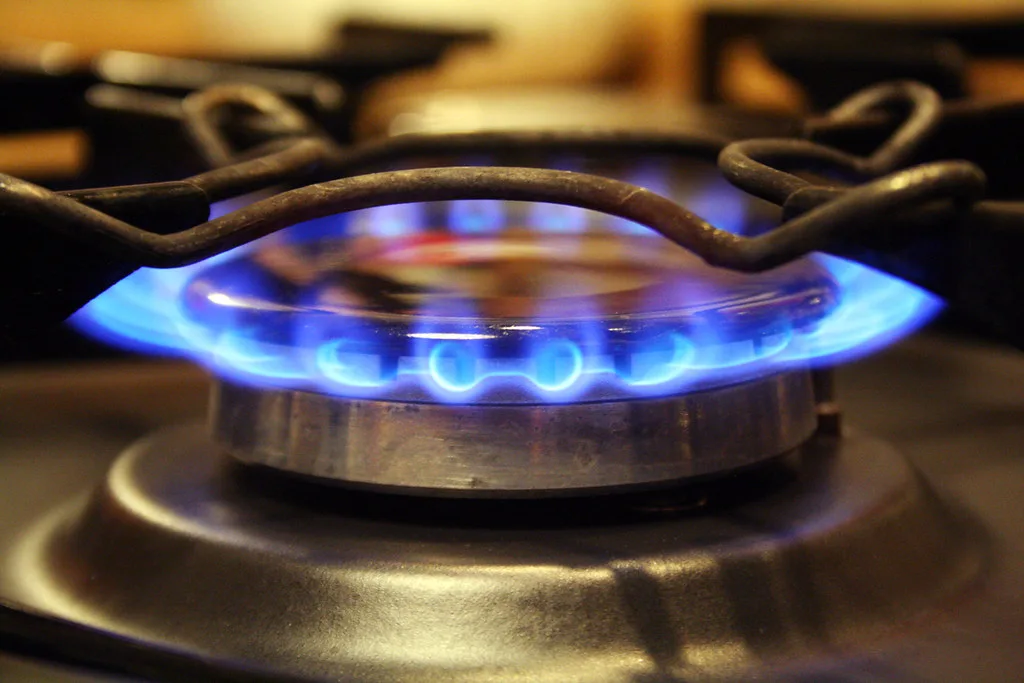
The induction vs gas range cooker decision looks like a straight fight between two hobs, and in practice that is exactly what it is. A “gas” range cooker sold today is nearly always dual fuel: a gas hob sitting on top of electric fan ovens. An induction range cooker has the same electric ovens underneath. So the ovens cost the same to run whichever you choose, and everything that differs comes down to the five burners or five zones on top, plus the wiring behind the cooker.
That makes the comparison cleaner than most articles let it be. Here it is, worked with the price cap that starts on 1 October 2026, real specifications from a 90cm range, and the things that matter more than money.
Running costs from 1 October 2026
Ofgem’s cap for 1 October to 31 December 2026 sets the average direct debit rates at 26.32p per kWh for electricity and 7.97p per kWh for gas. One change matters here: the government has removed VAT from electricity bills from 1 October 2026 to 31 March 2027, while gas still carries 5% VAT. Electricity is now 3.3 times the price of gas per kWh, down from about 3.6 times over the summer.
Induction is far more efficient. About 85% of the energy reaches the pan, against 55% for a gas hob that only meets the legal minimum. But the gap in efficiency is smaller than the gap in price, so gas still wins on the units.
| October 2026 cap | Gas hob (55%) | Induction (85%) |
|---|---|---|
| One pan-boil of 1.5 litres | about 2.15p | about 4.58p |
| A year of hob cooking (216.5 kWh into food) | about £31 | about £67 |
That annual figure uses the same household as our cooker hob running cost breakdown: the equivalent of four pan-boils a day. On those numbers induction costs about £36 a year more than a gas hob. Cook more and the gap grows in proportion; cook less and it shrinks.
The gap is about £2 narrower than under the summer cap, and without the VAT cut induction would cost about £3 a year more again. The cut is temporary, running to the end of March 2027.
The £108 that can reverse it
Gas has a standing charge of 29.68p a day under the October cap, about £108 a year. If your range cooker is the only gas appliance in the house, going induction lets you close the gas account and that £108 disappears, which more than cancels the £36. Induction then works out roughly £72 a year cheaper.
For most range cooker owners that is not the situation. If a gas boiler heats the house, the standing charge stays whatever you cook on, and gas remains the cheaper hob. Our running cost calculator lets you put in your own tariff and cooking habits.
Speed: closer than the adverts suggest
The usual claim is that induction is dramatically faster. It is faster, but a range cooker’s big burner narrows the lead once you convert both into heat that actually reaches the pan.
Take the Rangemaster Classic 90 as the example, because it is sold in both versions. According to Range Cookers’ specification for the Classic 90 Induction, its five zones run at 1.85kW or 1.55kW, with boost settings of 3.0kW, 2.5kW and 2.0kW. The dual fuel Classic Deluxe 90 carries burners from 1.0kW up to a large right-hand burner rated at 3.5 or 4kW depending on the version.
| Heat reaching the pan | Gas burner input | Induction zone |
|---|---|---|
| Everyday burner or zone | 1.7kW × 55% = about 0.9kW | 1.55kW × 85% = about 1.3kW |
| Largest, flat out | 4.0kW × 55% = about 2.2kW | 3.0kW boost × 85% = about 2.6kW |
So on everyday burners induction delivers around 40% more heat, and that is where you notice it: pasta water, a pan of potatoes, reheating. At the top end the difference is modest, and a big gas burner is always on full, whereas boost on most induction hobs is time-limited and shared between zones.
Induction also responds instantly in both directions. Turn a zone down and the boil drops within a second or two, because the pan is the only thing that was hot. A gas flame responds quickly too, but a heavy cast iron pan support keeps radiating heat.
Cooking feel and what each does badly
Gas does well: wok cooking with a round-bottomed wok in a cradle, charring peppers or tortillas directly on the flame, and any pan at all, including copper, aluminium and old enamel. You can see the heat, which many people who learned to cook on gas find hard to give up.
Gas does badly: very low simmers on the small burner can still be too hot for melting chocolate, the pan supports and burner caps take real effort to clean, and heat spills round the sides of the pan into the kitchen.
Induction does well: precise low settings (many models have dedicated low levels for melting and simmering), fast boiling on everyday zones, and a flat glass top that wipes clean because food does not bake onto it.
Induction does badly: it only works with pans a magnet sticks to, a round-bottomed wok will not work without a special zone, and the glass can scratch if you drag cast iron across it. Our induction range cooker guide has the ten-second pan test.
Installation and wiring
This is the part that decides many kitchen refits, and it usually favours whatever you already have.
Replacing dual fuel with dual fuel is straightforward. The electric ovens typically need a 32 amp cooker circuit, and the gas connection must be made by a Gas Safe registered engineer, which is a legal requirement rather than a recommendation.
Replacing dual fuel with induction often means a bigger circuit. The same retailer lists the Classic 90 Induction at an electrical load of 14.66kW with a 45 amp cooker box. Whether your existing cable and consumer unit can take that is an electrician’s question, and it is worth asking before you order the cooker. Diversity rules mean a 14.66kW cooker does not always need a full 14.66kW circuit, but many older kitchens were wired for 32 amps and some will need new cable. The gas pipe should be capped off by a Gas Safe engineer.
Replacing induction with gas requires a gas supply to the kitchen. If there is none, the pipework is usually the biggest cost of the whole swap.
So which should you buy?
Choose a dual fuel (gas hob) range cooker if:
- You already have gas to the kitchen and gas central heating
- You wok cook often or char food over a flame
- You own copper or aluminium pans you want to keep using
- Your kitchen circuit is 32 amps and rewiring would be disruptive
Choose an induction range cooker if:
- The cooker is your only gas appliance, so switching lets you drop the £108 standing charge
- You want fast everyday boiling and very precise low heat
- Easy cleaning matters more to you than cooking on a flame
- Your electrics already support a 40 or 45 amp cooker circuit, or you are rewiring anyway
If you are weighing the wider field, including all-electric ranges with ceramic hobs, range cooker fuel types compared and dual fuel vs electric range cookers cover the options this page leaves out.
Frequently asked questions
Is an induction range cooker cheaper to run than a gas one? Not on the units at the October 2026 price cap. A gas hob costs about £31 a year for typical cooking and induction about £67, because electricity costs 3.3 times as much per kWh. Induction only comes out ahead if the cooker is your last gas appliance and you drop the £108 gas standing charge.
Do induction and dual fuel range cookers use the same ovens? Usually yes. Both normally have electric fan ovens and an electric grill, so oven running costs are the same. The difference is the hob on top, and the fact that an induction model needs a larger electrical supply.
Does an induction range cooker need a 45 amp supply? Often. Rangemaster’s Classic 90 Induction is listed with a 14.66kW load and a 45 amp cooker box, while its dual fuel sister is listed at 32 amps. Ask a qualified electrician to check your circuit, cable and consumer unit before buying.
Is induction faster than gas on a range cooker? On everyday zones, yes: about 1.3kW reaches the pan from a 1.55kW induction zone against about 0.9kW from a 1.7kW gas burner. At full power the gap narrows, because the largest gas burners on 90cm ranges are rated at 3.5 to 4kW.
Can I use a wok on an induction range cooker? A flat-bottomed wok made of carbon steel or cast iron works on a normal induction zone. A traditional round-bottomed wok needs gas, which is one of the strongest reasons keen wok cooks stay with a dual fuel range.
Did the October 2026 VAT change make induction cheaper than gas? No. Removing VAT from electricity between 1 October 2026 and 31 March 2027 trims the cost of induction cooking by a few pounds a year, but gas remains cheaper on the units for anyone keeping a gas supply.