News
Heating Oil Eases to £972 per 900 Litres, Still Double 2025

By the Hill & May team
Updated 2026
Oil for an AGA or Rayburn has eased slightly for the first time since the late-summer spike, though it is still about twice what it cost this time last year. The other two items are for anyone planning a new kitchen around a range: a fresh row over quartz-style worktops, and a market report that says spending is moving upmarket while the number of kitchens sold falls.
Heating oil: down for a second week, but double last October
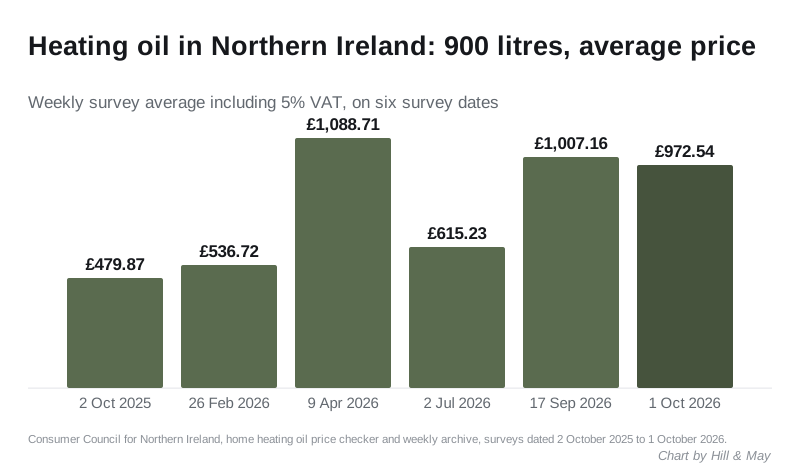
The Consumer Council for Northern Ireland surveys heating oil suppliers every week, and its 1 October 2026 survey put the average price of 900 litres at £972.54, including 5% VAT. That is about 108p a litre. It is the second weekly fall in a row: the average was £996.51 on 24 September and £1,007.16 on 17 September, so it has come down by £34.62, or about 3.4%, in a fortnight.
The longer view is less comforting. On 2 October 2025 the same 900 litres averaged £479.87, so this week’s price is just over double. The survey’s archive shows how jumpy the year has been: £536.72 on 26 February, a peak of £1,088.71 on 9 April, back down to £615.23 on 2 July, then up again through August and September.
These are Northern Ireland prices, where oil is the main heating fuel for many homes and the weekly survey is the most complete public record; prices in Great Britain are set differently and vary by region. If you run an oil-fired range cooker, a fortnight of easing is a reason to get quotes now rather than wait for the cold weather, and a reason to compare at least three suppliers, because even this week’s survey shows a gap of about £7 between towns, from £968.47 in Antrim to £975.63 in Ballycastle. If you are choosing a cooker for a home off the gas grid, our guide to LPG and oil range cookers and the range cooker running cost calculator will let you set this year’s prices against electric. The figures are on the Consumer Council’s price checker and its weekly archive.
California moves to ban high-silica worktops; the UK fabricators’ body says no to a ban here
California’s workplace safety regulator, Cal/OSHA, has published a draft emergency rule that would stop stone companies fabricating engineered stone containing more than 1% crystalline silica by weight, kbbreview reported on 30 September. It covers worktops, splashbacks, waterfall edges, walls and floors. Comments were accepted until 30 September, and if the rule is adopted fabricators would have 60 days to prepare. Australia banned the material outright in 2024. The concern is silicosis, an incurable lung disease caught by workers who cut and polish the slabs, not by the people who live with the finished worktop.
In the UK, the Health and Safety Executive has already banned dry cutting of engineered stone and made water suppression a legal requirement, but stopped short of a ban. The Worktop Fabricators Federation told kbbreview it still does not want one, saying “a blanket ban risks simply moving the problem elsewhere”, and warned that a “lower” or “no” silica marketing claim does not on its own make a product safe to work. Caesarstone UK has said that from 2027 all its products will move to its crystalline silica-free range.
For a buyer, the practical step is to ask your kitchen company who fabricates the worktop, whether they wet-cut, and what the slab’s silica content is. If you would rather avoid the question entirely, timber, granite and solid surface materials are all still on the table, and our kitchen worktop calculator will price the area either way. Reports: the California rule and the WFF response.
Fewer kitchens are being sold, but people are spending more on each
A new report from MTW Research, covered by kbbreview on 23 September, says UK kitchen market volumes are 20% lower than in 2019, with some sectors in their fifth year of decline, and the market has lost £1 billion in real terms since 2022. At the same time it describes “premiumisation” speeding up: brassware sales are up around 11% since 2019, the kitchen sink market is estimated to have grown by £20 million since before Covid, and built-in appliance sales are forecast to rise by more than 15% over the next few years.
What that means for you: independent kitchen retailers are chasing fewer, bigger jobs, which gives a buyer with a firm budget some room to negotiate on fitting, delivery and ex-display stock. If the budget is tight, our ex-display kitchens guide and kitchen renovation cost guide show where the savings are. The report summary is at kbbreview.