Aga Cookers
Aga eR3 Review: Now the AGA Compact, 634mm Deep

By the Hill & May team
Updated 2026
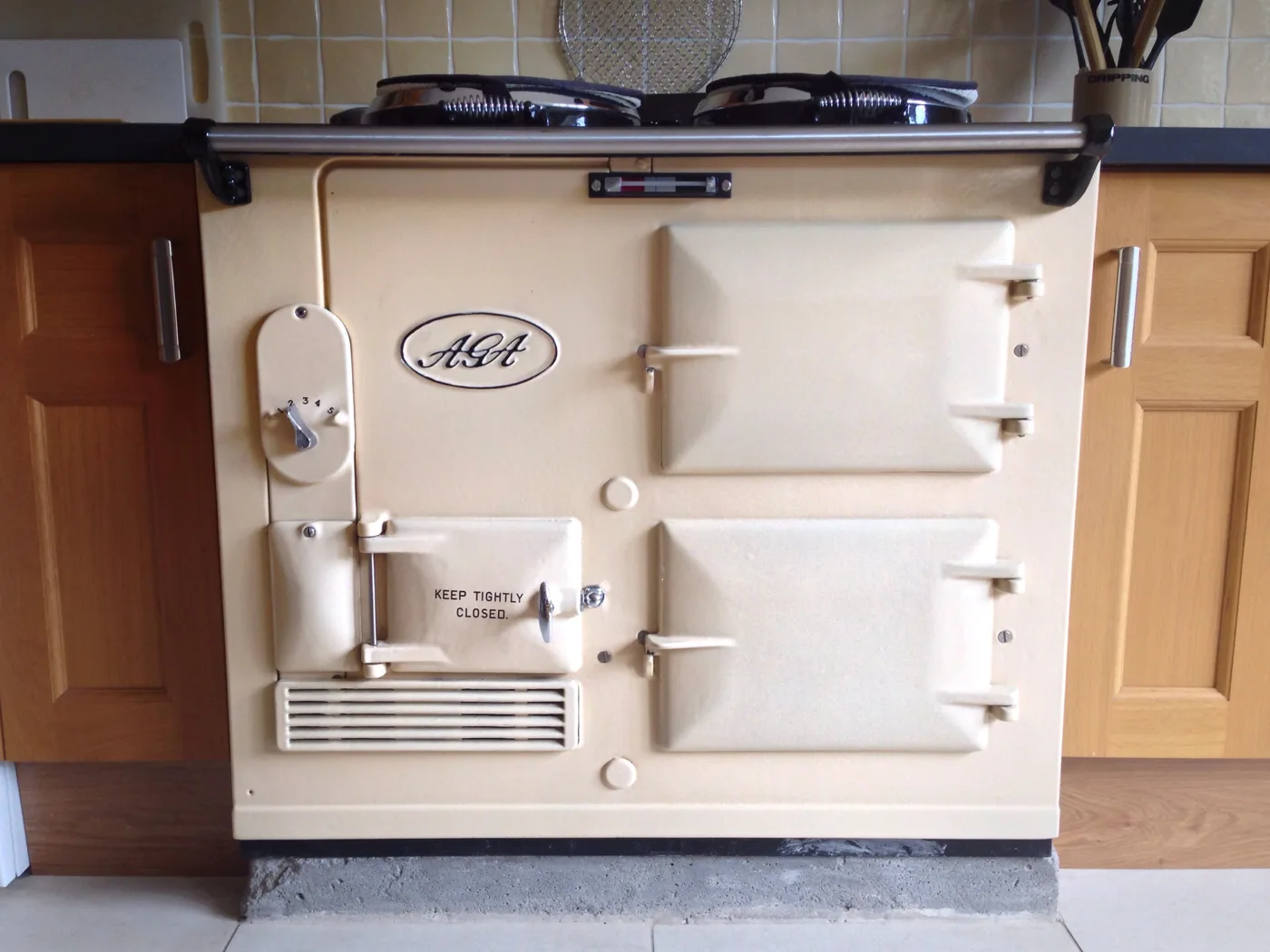
This Aga eR3 review has to open with a name change. AGA no longer sells a cooker called the eR3. The old eR3 page on agaliving.com now shows the AGA Compact, and the user manuals AGA links from each Compact product page are still titled “AGA eR3 90”, “AGA eR3 100” and “AGA eR3 110”. Same cooker, new badge. If a showroom quotes you a Compact, this is the review you want; if you are looking at a second-hand eR3, everything below applies to it too.
The short verdict: the eR3 is the Aga for a normal fitted kitchen. It is shallower than every other cast-iron Aga, so it lines up with standard worktops, and it pairs two cast-iron ovens with an induction hob so you are not relying on stored heat for every quick job. You give up the third cast oven and some of the warmth that makes a big Aga the heart of a room.
The depth is the whole point
Every current AGA spec sheet gives the depth excluding the handrail. The AGA Compact specification sheet lists 634mm. The Signature (the old eR7) and the Classic are both 698mm. That 64mm is the difference between a cooker that sits flush with a standard 600mm-deep run of units plus worktop overhang, and one that stands proud of it or needs the units brought forward.
It is why AGA pitches the Compact at people replacing an existing range cooker. If you are keeping your kitchen and swapping out a tired 100cm or 110cm range, the eR3 is the only cast-iron Aga designed for that hole.
| AGA Compact 90 | AGA Compact 100 | AGA Compact 110 | |
|---|---|---|---|
| Width | 900mm | 984mm | 1100mm |
| Height | 913mm | 913mm | 913mm |
| Depth (excl. handrail) | 634mm | 634mm | 634mm |
| Hob | Hotplate + 2-zone induction | Hotplate + 2-zone induction | Hotplate + 3-zone induction |
| Cast-iron ovens | Roast/bake, simmer | Roast/bake, simmer | Roast/bake, simmer |
| Also | Stainless warming oven | Warming oven, cookware storage | Warming oven, cookware storage |
| Warranty | 5 years | 5 years | 5 years |
All three can take a 60cm extension module with an A-rated fan oven and a simmering plate, taking the cooker to 150cm, 160cm or 170cm. The module adds a conventional oven with a stated 90-litre capacity, which fills the gap most eR3 owners notice first. The 100 alone weighs 305kg, according to its product fiche, so check the floor before you order. There are 18 enamel colours plus a bespoke colour service.
How it cooks
The cast-iron ovens. The top oven has two settings, roasting and baking, and the simmering oven below runs at a fixed low heat for stews, stock, rice and steamed puddings. Heat comes off the iron as radiant heat rather than being fanned, which is what gives Aga roasts and bread their reputation. The manual is blunt about timing: allow an hour for the ovens to heat up from cold. The optional programmer (a pre-heat timer kit) is the fix, bringing the top oven up to heat before you get home.
The hotplate. One cast-iron plate that you set to boiling or simmering. The manual puts its heat-up time at 12 to 15 minutes, and it runs independently of the ovens. You still need flat-based Aga-style pans for full contact.
The induction hob. Two zones on the 90 and 100, three on the 110, with a bridge function for a griddle or fish kettle. This is what makes the eR3 livable for weekday cooking: pasta water, a quick fry-up or a sauce happen on induction in minutes, without heating the whole cooker. You will need induction-compatible pans for it.
What you give up. Compared with the old three-oven eR7 or a Classic, there is no separate baking oven running at a different heat at the same time. You switch the top oven between roast and bake. Cooking a joint and a cake side by side is harder unless you add the extension module’s fan oven.
Running costs
The eR3 is electric only and room vented, so there is no flue, no oil tank and, as AGA points out, no annual service for the cooker, which gas and oil Agas need. What you pay depends almost entirely on which ovens you leave on and for how long.
AGA’s test figures for the eR3, quoted by Quince & Cook at a 27.69p per kWh unit rate, work out as follows. We have converted them back to kWh so you can apply your own tariff:
| Left on continuously | Energy per week | Cost per week at 27.69p/kWh |
|---|---|---|
| Both cast-iron ovens on full | about 82 kWh | £22.70 |
| Roasting oven only | about 63 kWh | £17.44 |
| Baking oven only | about 50 kWh | £13.85 |
| Simmering oven only | about 20.5 kWh | £5.68 |
| Warming oven only | about 17 kWh | £4.70 |
The same source puts real-world use, with one or two ovens on part-time, at £8 to £18 a week. Nobody needs both ovens on full around the clock, and on a time-of-use tariff a programmed overnight heat-up changes the sums again. Our Aga running costs guide covers the annual picture across the range.
Installation: two electrical supplies
This catches people out. According to the installation section of the AGA eR3 100 manual, the cooker needs a dedicated 32 amp single-phase supply (or three-phase at a minimum of 16A per phase, with an adaptor kit), with an isolator within two metres. The induction hob needs a separate 13 amp supply. If you are replacing a gas range, budget for an electrician to run a new radial circuit as well as the Aga installer. The manual also recommends a cooker hood above it, because the room vent on top releases cooking moisture into the kitchen.
Who the eR3 suits
Buy one if you want genuine cast-iron Aga cooking in a standard fitted kitchen, you are replacing a range cooker of a similar width, you cook most days, and you want induction for the quick jobs. It also suits homes with solar panels: AGA says its current electric cookers work with renewable energy, and the ability to turn ovens down makes that easier to match to generation.
Look elsewhere if you want the full three-oven Aga experience or constant background warmth (the Aga eR7, now the Signature, or a Classic), you cook rarely enough that an hour’s heat-up will annoy you, or you want every oven at a precise temperature on demand, in which case a conventional induction range cooker is the more honest choice. If you are still weighing up brands, our Aga vs Rangemaster comparison covers the trade-offs.
Frequently asked questions
Is the Aga eR3 still made? Yes, under a new name. AGA now sells it as the AGA Compact in 90cm, 100cm and 110cm widths, and the current user manuals are still titled eR3. The old eR3 page on AGA’s website now shows the Compact.
How long does an Aga eR3 take to heat up? About an hour for the cast-iron ovens from cold, and 12 to 15 minutes for the cast-iron hotplate, according to AGA’s manual. The induction hob is instant. An optional pre-heat timer can have the top oven ready when you need it.
Will an Aga eR3 fit in a standard kitchen? It is designed to. At 634mm deep excluding the handrail, it is 64mm shallower than the AGA Classic and Signature and sits in line with standard-depth cabinetry. Check the width against your gap: 900mm, 984mm or 1100mm.
How much does an Aga eR3 cost to run? AGA’s test data puts it at about 82 kWh a week with both ovens on full continuously, and about 20.5 kWh a week for the simmering oven alone. Real use, with ovens on part-time, usually costs a fraction of the all-on figure.
Does the eR3 need a flue or servicing? No flue: it is electric and room vented, though a cooker hood is recommended. AGA says its current electric cast-iron cookers do not need an annual service, unlike gas and oil models.
What electrical supply does an Aga eR3 need? A dedicated 32 amp single-phase supply for the cooker, plus a separate 13 amp supply for the induction hob, according to the installation instructions. Budget for an electrician if you are replacing a gas cooker.
Sources
Dimensions, layouts and warranty from the AGA Compact specification sheet; weight from the AGA Compact 100 product fiche; heat-up times and electrical requirements from the AGA eR3 100 user and installation manual; running-cost test figures from AGA via Quince & Cook’s 2026 guide; servicing and renewable-energy points from agaliving.com’s running costs page. All checked 30 September 2026.