Aga Cookers
Aga eR7 Review: Now the AGA Signature, Worth It in 2026?

By the Hill & May team
Updated 2026
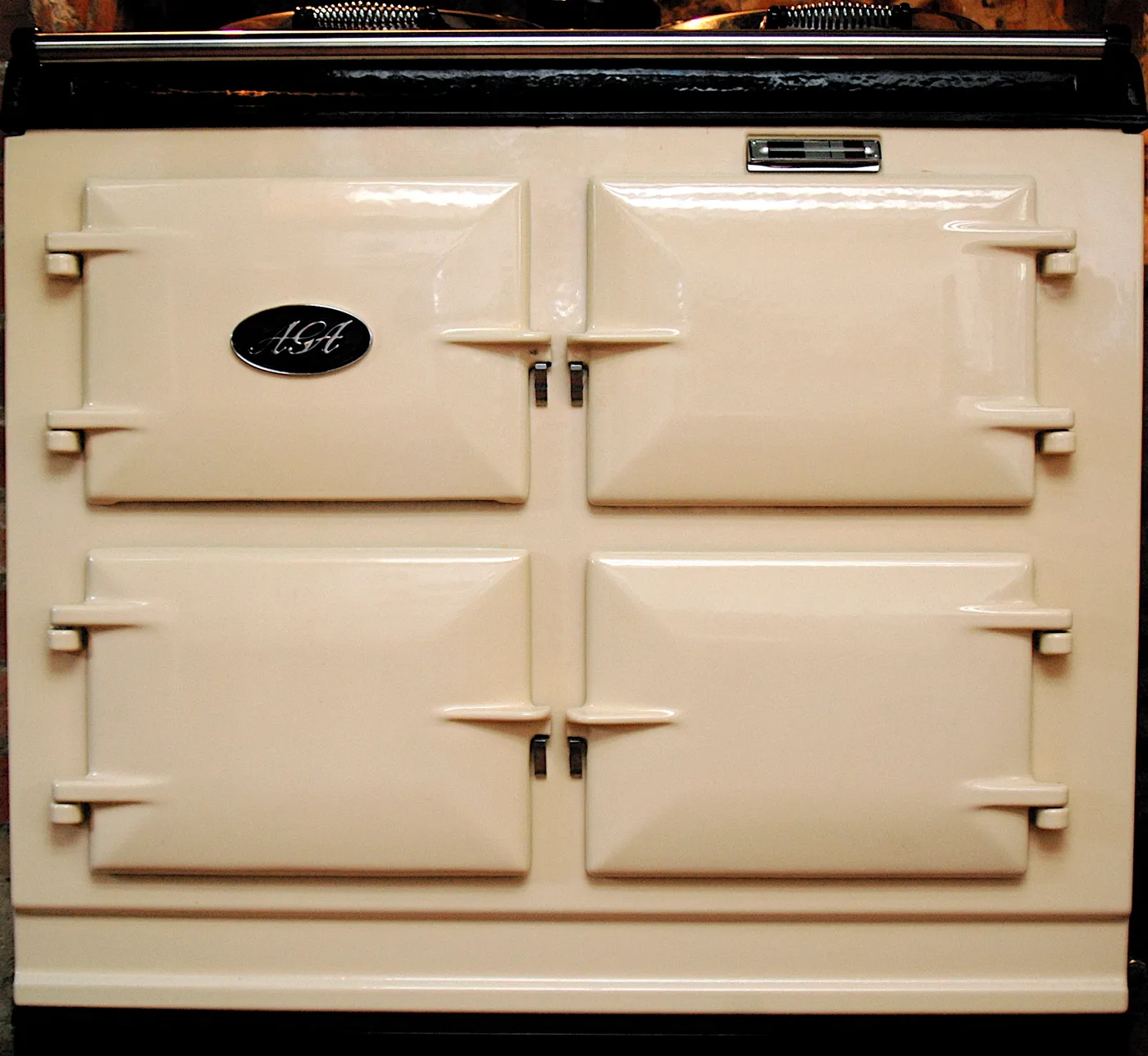
This Aga eR7 review starts with something most reviews online have not caught up with: AGA no longer sells a cooker called the eR7. The old eR7 page on agaliving.com now opens on the AGA Signature, and the user guide AGA links from the Signature Induction product page is still titled the “AGA eR7i 100i User Guide”. It is the same cooker family under a new name, so if a showroom quotes you a Signature, this is the review you want, and if you are looking at a second-hand eR7, everything below applies to it too.
The short verdict: the eR7 is the Aga for people who want the cast-iron cooking but not the always-on bill. You can switch every oven and hotplate on and off independently, which changes how an Aga fits into a normal week. The price of that flexibility is warm-up time, and it is the thing owners have to plan around.
What you actually get
There are two versions at 100cm wide, and both can be extended.
AGA Signature (the twin-hotplate eR7). According to AGA’s specification sheet:
- a boiling plate and a simmering plate
- three cast-iron, heat-storage ovens: roasting/baking, baking and simmering
- electronic touch controls, compatible with the AGA programmer
- a choice of room-vented or externally vented
AGA Signature Induction (the eR7i). Swaps a hotplate for induction:
- a two-zone induction hob with bridge mode for griddles and fish kettles
- one cast-iron hotplate that you set to boiling or simmering
- a cast-iron roasting/baking oven with a grill, a cast-iron simmering oven, and an A-rated fan oven
Both 100cm cookers measure 987mm wide, 698mm deep (excluding the handrail) and 915mm high, and carry a five-year warranty. A 50cm extension module adds a slow-cook oven, a warming oven and either a warming plate or a single-zone induction hob; a 60cm module adds a slow-cook oven with grill, an A-rated fan oven and a gas or ceramic hob. Fit one, the other, or both to reach 150cm, 160cm or 210cm. AGA lists 18 vitreous enamel colours, plus a bespoke colour service.
How it cooks
The cast ovens are the reason to buy any Aga, and they are unchanged in spirit. Heat radiates from the iron rather than being blown around, so roasts stay moist and nothing dries out on a long cook. In the eR7i, the top cast oven has nine pre-set settings that map roughly to gas marks: B1 to B4 for baking, R6 to R9 for roasting, and G for grilling. The simmering oven sits at a fixed low heat for casseroles, stock and steamed puddings, and both cast ovens take a 10kg turkey.
The practical change from a traditional Aga is on the hob. On an old always-on model the hotplate slowly loses heat as you cook, so long boiling sessions draw the whole cooker down. On the eR7 each hotplate has its own element and its own thermostat, so it can be used for the full cooking time of a dish without borrowing heat from the ovens. The induction version goes further: induction is instant, and it gives you a precise low heat for sauces and chocolate that no cast-iron plate can match.
The warm-up times, from AGA’s own user guide
This is the part to read before you buy, because it decides how the cooker fits your day. The eR7i user guide gives these approximate heat-up times with each zone run on its own:
| Cooking zone | Approximate heat-up time |
|---|---|
| Hotplate, simmering setting | 10 minutes |
| Hotplate, boiling setting | 15 minutes |
| Grill | 10 minutes from cold, 2 minutes from R6 |
| Fan oven | within 12 minutes (to R9) |
| Cast ovens | about 1 hour |
Two caveats sit under that table. AGA says the castings are best left for an hour to “fully saturate” for optimum results, and if you switch every zone on at once, the whole cooker takes about an hour to reach temperature.
In real use this means one of two habits. Either you leave a cast oven on Slumber (the eR7i’s Slumber mode holds the top cast oven at about 120°C and the simmering oven at about 100°C) so it is part-way there when you need it, or you use the built-in programmer to bring the ovens up before you get home. Owners who expect to walk in and roast straight away end up leaning on the fan oven, which is why the Induction version, with its fan oven built in, is the easier one to live with day to day.
Running costs
AGA’s own current figure for the cast-iron cookers it sells today, the Signature included, is “around £25 to £30 per week”, based on electricity at 26.11p per kWh in July 2026, and it says many homes spend less. The real number depends almost entirely on how many zones you keep hot and for how long. Switch it off in a heatwave and it costs nothing; run all three cast ovens flat out through a cold January and you will be at the top of that range.
Our Aga running costs per year page turns that into annual figures by model and compares the eR7 with the older always-on types.
Installation: the supply matters more than the flue
The eR7 is all-electric, needs no flue for the room-vented version, and does not need a plinth, which makes it far easier to fit into an existing kitchen than an oil or gas Aga. What it does need is the right electrical supply. AGA’s eR7 installation guide specifies a fused supply adjacent to the cooker of either single-phase 230V at 32 amps or three-phase 400V at a minimum of 16 amps per phase, with at least 6mm² cable from the cooker connection point to the consumer unit on a single-phase supply. Have an electrician check your board and cable run before you order, not after it arrives.
It is also heavy. Cast iron is the point of the cooker, and the floor needs to take it, so check with the installer if your kitchen has a suspended timber floor.
Who the eR7 suits, and who it does not
Buy one if you want real cast-iron cooking, you cook most days, you like a warm kitchen in winter but do not want it running through summer, and you have solar panels or a time-of-use tariff to lean on. AGA itself notes the current collection is better suited to renewables because you can turn zones off.
Look elsewhere if you need an oven hot in ten minutes on a weeknight without planning, or the budget is the priority. A conventional range will cost far less to buy and to run. Our Aga vs Rangemaster comparison sets out that trade honestly, and our overall AGA range cooker explainer covers the rest of the line-up, from the 60cm AGA Mini to the Rayburn.
Frequently asked questions
Is the Aga eR7 still made? Yes, but under a new name. AGA’s website now sells it as the AGA Signature, and the old eR7 page redirects there. The induction version’s user guide is still titled the eR7i guide.
How long does an Aga eR7 take to heat up? According to AGA’s user guide, about 10 minutes for the simmering plate, 15 minutes for the boiling plate, and about an hour for the cast-iron ovens. The fan oven on the induction model reaches R9 within 12 minutes.
Can you turn an Aga eR7 off? Yes. Every oven and hotplate can be switched on and off independently, and the programmer can bring the cast ovens up to temperature on a schedule.
What does an Aga eR7 cost to run? AGA puts its current cast-iron cookers at around £25 to £30 a week at 26.11p per kWh, and less in many homes. Turning zones off when you are not using them is what brings it down.
Does an Aga eR7 need a flue? Not the room-vented version. It does need a dedicated electrical supply: 32 amps single-phase or 16 amps per phase on three-phase, per AGA’s installation guide.
Signature or Signature Induction? Choose the twin-hotplate Signature for three cast-iron ovens and the classic Aga experience. Choose the Induction if you want a fast hob and a fan oven for weeknights while keeping cast-iron roasting and slow cooking.
Sources
- AGA Living: AGA Signature product page and the AGA Signature and AGA Signature Induction specification sheets.
- AGA Living: AGA eR7i 100i user guide (warm-up times, oven settings, Slumber temperatures).
- AGA Living: running costs page (July 2026 figure).
- AGA Living: eR7 installation guide (electrical supply requirement).