Buying Guides
Tall Kitchen Units: Larder, Pantry and Tower Cabinets Explained

By the Hill & May team
Updated 2026
Tall Kitchen Units: Larder, Pantry and Tower Cabinets Explained
Tall kitchen units are the floor-to-ceiling cabinets that do the heavy lifting in a well-planned kitchen: the larder that swallows a fortnight of dry goods, the tower that hides a built-in oven and microwave, the broom cupboard that keeps the mop out of sight. Get them right and a country kitchen feels calm and uncluttered. Get the sizing or the internal fit-out wrong and you end up with a wall of doors that waste the very space they were meant to save. This guide explains the types of tall kitchen units, the standard UK sizes, and how to choose between a larder, a pantry and an appliance tower.
What counts as a tall kitchen unit
A tall unit is any cabinet that runs from the floor to roughly worktop-and-wall-cabinet height in one continuous run, rather than stopping at the worktop like a base unit. They are also called tower units, larder units or high units, and the terms overlap in practice. What they share is a full-height carcass that gives you deep, uninterrupted storage or a housing for a stacked appliance.
They fall into a few clear jobs:
- Larder units for food and dry-goods storage, usually with a mix of fixed shelves and, in better versions, pull-outs.
- Pantry units which are larders fitted out for provisions, often with internal drawers, spice racks and door-mounted shelving so everything is visible at a glance.
- Appliance towers built to house a single or double oven, a microwave, or a warming drawer at a comfortable height.
- Fridge and freezer housings that box in a tall integrated appliance behind matching doors.
- Broom or utility cupboards for cleaning kit, the ironing board and the vacuum.
Standard UK tall unit sizes
This is where planning succeeds or fails, so it pays to know the numbers before you fall for a design.
Heights. UK tall units come in three standard carcass heights: 1820mm, 1970mm and 2150mm. On top of that sits an adjustable leg, typically 150mm, so the installed height is around 150mm more than the carcass figure. The height you choose usually needs to line the unit up with the top of your wall cabinets for a tidy, level run, so decide the whole wall together rather than in isolation. Retailers such as Magnet list their exact carcass heights, and it is worth checking these against your ceiling height and any coving.
Widths. Tall units are generally supplied between 300mm and 600mm wide. A 300mm unit makes a slim pull-out larder or a broom cupboard; 500mm and 600mm widths are the common choices for a generous larder or an oven housing. Wider provision storage is usually achieved by pairing two units rather than one very wide door.
Depth. Most tall units match the base-unit depth of around 570mm to 600mm so they sit flush with the rest of the run, though appliance housings are built to the depth the appliance demands.
For the full picture across every cabinet type, see our kitchen cabinet sizes reference.
Larder vs pantry vs appliance tower
The right unit depends on what you are actually storing.
A larder is the workhorse. If you mainly want more shelf space for tins, packets and small appliances, a straightforward larder with adjustable shelves is the sensible, cheaper choice. Add pull-out shelves if the budget allows, because reaching to the back of a deep fixed shelf is the classic frustration of a poorly specified larder.
A pantry earns its keep when you cook from scratch and want everything on show. The door-mounted racks and internal drawers bring items to you rather than making you dig, which is why pantry units cost more than a plain larder of the same size. In a farmhouse or country kitchen a dedicated pantry pull-out is often the single most useful cabinet in the room.
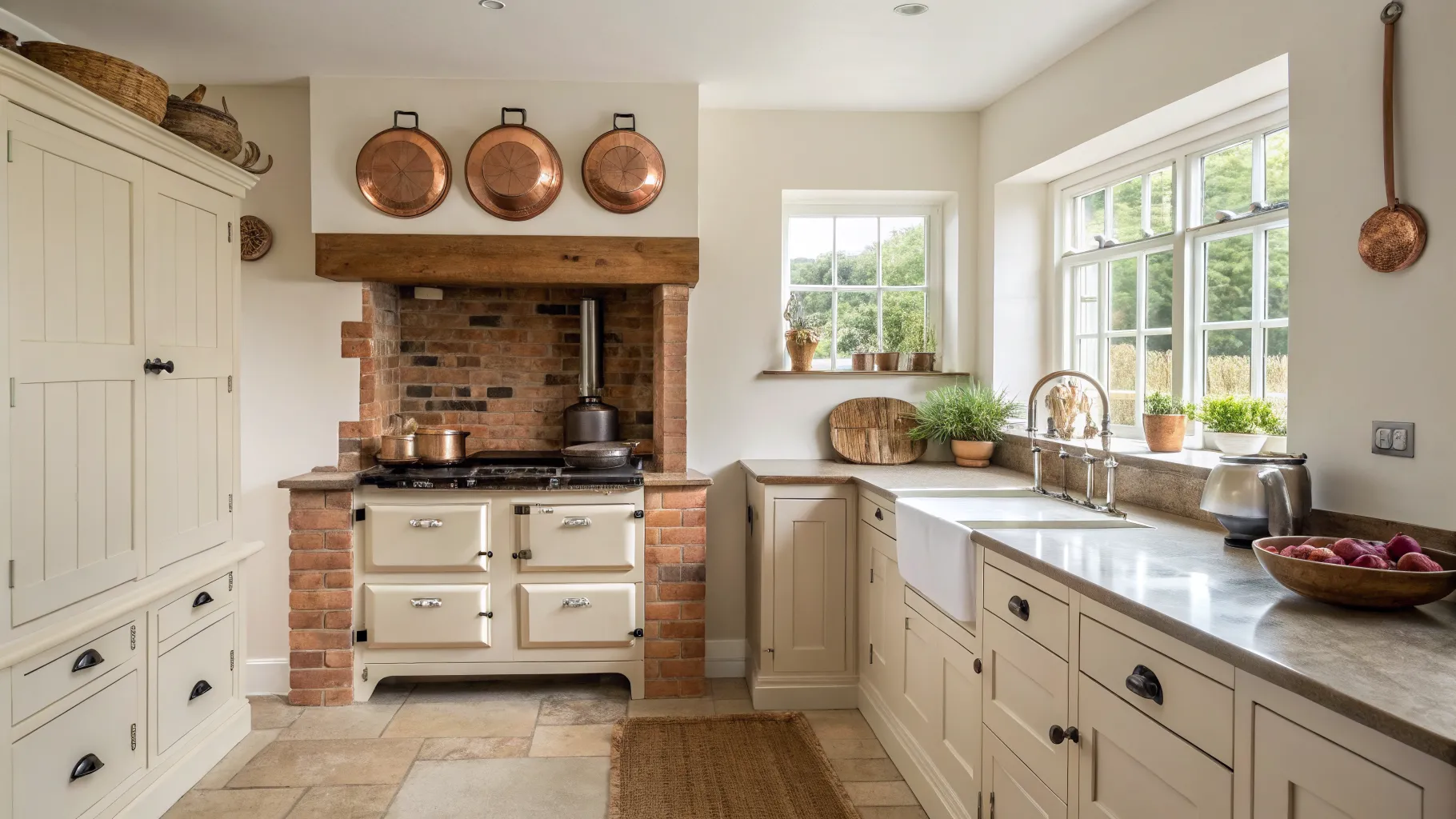
An appliance tower is a different decision driven by ergonomics. Housing an oven at mid-height saves your back and frees up the run below the worktop for drawers and pull-out storage. If you are choosing a range cooker instead of a built-in oven, you will not need an oven tower, but a tall larder alongside the range still makes sense.
How to choose and where to place them
Group your tall units together rather than dotting them around the kitchen. A single bank of full-height cabinets at one end of the run reads as a clean wall and keeps the working zone between hob, sink and fridge uninterrupted. Splitting tall units on either side of a window or a range can look balanced, but never break up the worktop with a lone tower in the middle of your prep space.
Think about what goes inside before you order. Pull-out larders, internal drawers and door racks have to be specified with the carcass, and retrofitting them later is fiddly and expensive. Measure your ceiling height against the installed unit height including legs and any cornice, especially in older country homes where ceilings slope or beams intrude. And plan the doors: full-height doors look elegant but need room to swing, so check clearances against islands and adjacent walls.
For neutral guidance on planning a kitchen layout around storage, the trade body Which? publishes independent kitchen planning advice worth reading before you commit.
Frequently asked questions
What are the standard heights for tall kitchen units in the UK? UK tall units come in three standard carcass heights: 1820mm, 1970mm and 2150mm, with an adjustable leg of about 150mm on top, so the installed height is roughly 150mm higher than the carcass. The height you pick normally needs to align with the top of your wall cabinets for a level run, so plan the whole wall together.
How wide are tall kitchen units? Tall kitchen units are generally supplied between 300mm and 600mm wide. Slim 300mm units suit pull-out larders and broom cupboards, while 500mm and 600mm widths are the usual choice for a full larder or an oven housing. For wider storage, most kitchens pair two tall units rather than using one oversized door.
What is the difference between a larder and a pantry unit? A larder is a tall unit fitted mainly with shelves for general food and dry-goods storage, and is the cheaper, simpler option. A pantry is a larder fitted out for provisions, with internal drawers, door-mounted racks and often pull-outs that bring items to you. The pantry costs more but makes everything visible and easy to reach.
Can a tall unit house an oven and microwave? Yes. An appliance tower is designed to house a single or double oven, and often a microwave or warming drawer stacked above or below it, at a comfortable working height. It saves bending to a low oven and frees the worktop run beneath for drawers, though you will need to match the housing to your specific appliance dimensions.
Do I need tall units if I have a range cooker? You will not need an oven-housing tower, since a range cooker is a freestanding appliance, but tall larder or pantry units still make sense alongside it for food storage. A common country-kitchen layout pairs the range with a bank of tall larders at one end of the run for a balanced, practical space.
How much space do tall unit doors need to open? Full-height doors need clear room to swing through their full arc, so check the clearance to any island, return wall or appliance opposite. In tight kitchens this can be the deciding factor between hinged doors and a pull-out larder, which needs depth in front but no side swing.