Buying Guides
Kitchen Wall Decor Ideas: Art, Prints and Accessories That Work

By the Hill & May team
Updated 2026
Getting wall art in the kitchen right is less about buying the perfect print and more about choosing the right wall, the right height and a style that survives a room full of steam, grease and clutter. A kitchen is a working space, so decor that looks lovely in a lounge can feel wrong here, either lost against busy cabinetry or hung somewhere it will warp within a month. This guide covers the ideas that genuinely work in a British kitchen, where to place them, and the few spots to leave well alone.
The good news is that a kitchen rewards personality. It is the one room where food prints, botanical illustrations and a personal gallery feel completely at home, and a few well-placed pieces do more for the space than another shelf of gadgets.
Best styles for a country kitchen
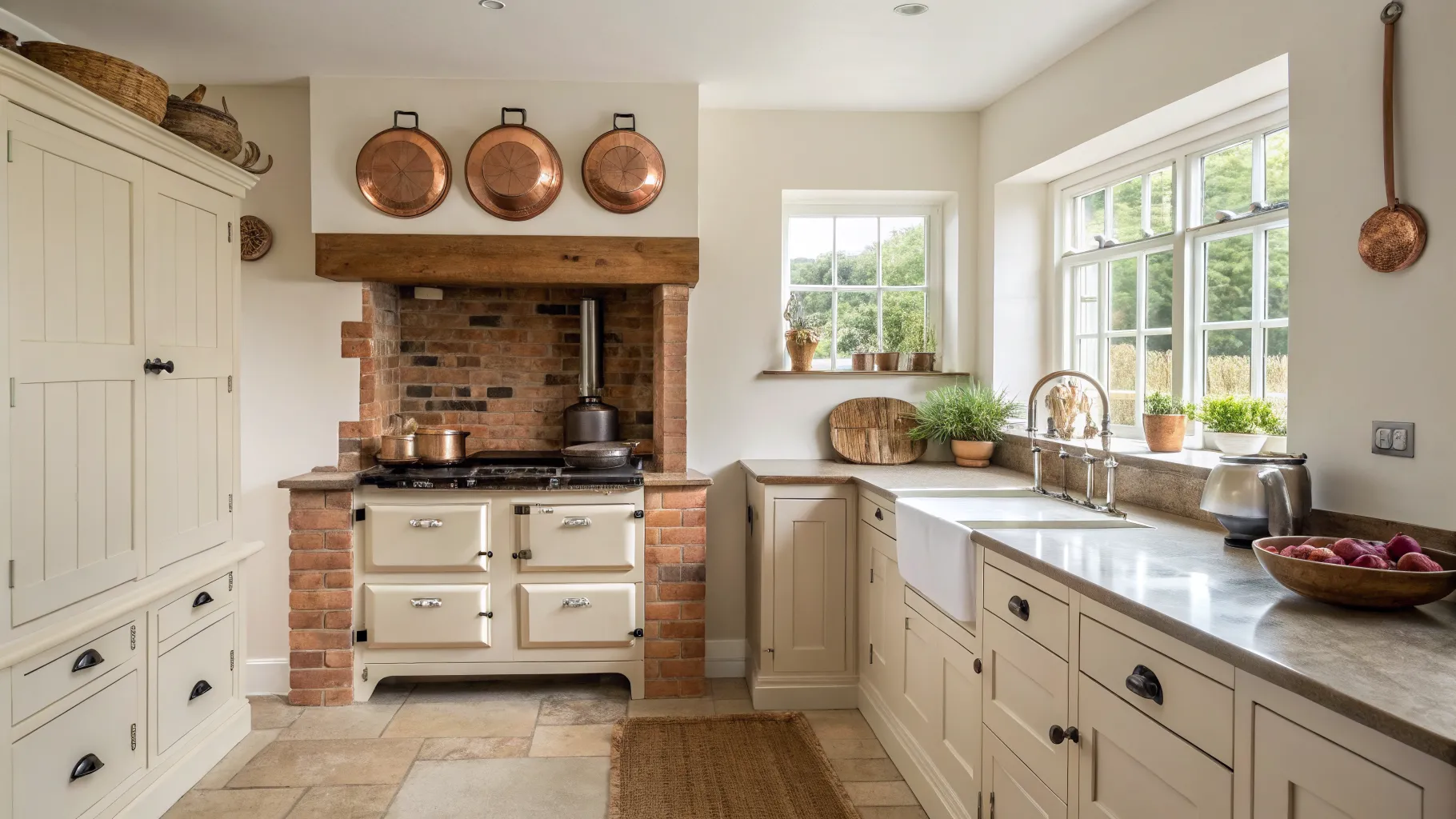
If you have a traditional or country kitchen, lean into it rather than fighting it. Vintage-style food prints, botanical and herb illustrations, and pictures of British produce all add the sense of nostalgia these rooms are built on. Soft, muted colours suit them best, adding warmth without shouting over painted Shaker units or a range cooker.
Against darker schemes, the rules flip slightly. Deep navy, forest green and near-black cabinets are everywhere now, and warm-toned art reads beautifully against them: terracotta landscapes, golden food photography and brass-framed prints all lift a dark kitchen rather than disappearing into it. If your kitchen is one of these colours, our guides to green kitchen ideas and navy and dark blue kitchen ideas show the wider look these pieces slot into.
Gallery walls and where they belong
A gallery wall is the highest-impact option, but only in the right place. It works best on the dining-end wall of an open-plan kitchen-diner, or on a good clear wall in a generous country kitchen. What it needs is space and a wall you are not constantly working against.
Where it fails is the compact galley kitchen, where a cluster of frames quickly feels busy and cramped. In a small or narrow kitchen, one larger piece almost always beats a scatter of small ones. To keep a gallery feeling collected rather than chaotic, tie it to the room with objects that echo it: a couple of chopping boards, some fruit, a run of recipe books in matching tones.
The showstopper spots
A few positions do most of the heavy lifting. Above the breakfast bar or kitchen island is the prime one in most modern kitchens, because that is where people sit, eat and look at the wall for long stretches. A Welsh dresser or sideboard gives you a natural ledge to hang above, and a clear stretch of wall by the kitchen table turns dead space into the focal point of the room.
Freestanding pieces count too. Leaning a framed print on a dresser shelf or worktop-height ledge is a low-commitment way to try art in a kitchen before you put holes in the wall.
Get the height right
This is where most kitchen art goes wrong. As a general rule, centre a piece at around 145 to 150cm from the floor, which is gallery eye-level for most adults. When you are hanging above furniture or a surface, measure from the surface instead: leave roughly 25 to 30cm clear between a worktop or breakfast bar and the bottom of the frame, and 15 to 20cm above a dresser or sideboard. That gap stops the art from looking like it is sitting on the surface while keeping it visually connected to it. Ideal Home has a good spread of real-room examples if you want to see the heights in context.
Beyond prints: accessories that earn their place
Wall decor is not only framed art. A wall-mounted rack, a row of open shelves styled with a few nice pieces, an antique clock, or a run of hanging utensils and copper pans all decorate a wall while doing a job. In a country kitchen especially, functional decor tends to look more honest than purely ornamental pieces. If storage is part of the plan, our kitchen shelving ideas guide covers open shelves and wall-mounted racks in more depth.
Where not to hang wall art
One firm rule: keep art off the splashback. The area directly behind the hob and around the sink is built to take heat, splatter and constant wiping, which is exactly what wall art is not made for. A print there will grease up, warp or discolour fast. Save the splashback for tiles, glass or stainless steel, and put the art on adjacent walls where it stays clean and dry. The same caution applies to any spot that sits in the direct line of steam from a kettle or pans.
Frequently asked questions
Is it OK to put wall art in the kitchen? Yes, a kitchen is one of the best rooms for wall art, as long as you keep it away from direct heat, steam and splatter. Food prints, botanical illustrations and personal galleries all suit the space. Just avoid the splashback and the area immediately around the hob, where grease and moisture will damage a print.
What kind of wall art suits a country kitchen? Vintage food prints, botanical and herb illustrations, and images of British produce all suit a country kitchen, ideally in soft, muted tones. These add warmth and nostalgia that works with painted cabinets, wooden dressers and a range cooker, rather than competing with them.
How high should I hang art in a kitchen? Centre a piece at roughly 145 to 150cm from the floor for a standalone wall. Above a worktop or breakfast bar, leave about 25 to 30cm between the surface and the bottom of the frame, and 15 to 20cm above a dresser or sideboard, so the art relates to the furniture below it.
Where should I not hang wall art in the kitchen? Avoid the splashback and the wall directly behind and beside the hob and sink. These areas take heat, grease and constant cleaning, which will warp or stain a print. Steam paths, such as directly above the kettle, are also best left clear.
Does wall art work in a small kitchen? Yes, but keep it simple. In a compact or galley kitchen, one larger piece usually looks better than a cluster of small frames, which can make a tight space feel busy. Choose a clear wall away from the working zone and let a single strong piece do the work.