Buying Guides
Kitchen Lighting Guide: The Best Lights for Every Kitchen Zone

By the Hill & May team
Updated 2026
Good kitchen lights do two jobs that pull in opposite directions: they have to be bright and shadow-free when you are chopping onions or reading a recipe, and soft and welcoming when you are sitting down to eat. One central ceiling fitting cannot do both. It leaves you working in your own shadow by day and staring at a flat, unforgiving glare by night.
The fix is layering, and it is not complicated once you know the zones. This guide walks through the three layers of kitchen lights, the best fittings for each area of the room, and the details that separate a kitchen that looks expensive from one that looks like an office.
The three layers every kitchen needs
Every well-lit kitchen combines three types of light. Get all three working together and you can shift the room from bright workshop to quiet supper with a couple of dimmers.
- Ambient (general) light fills the room with overall brightness so you can move around safely.
- Task light puts focused, bright light exactly where you prepare and cook.
- Accent light highlights features and adds the warmth that makes the space feel finished.
Skip any one layer and you feel it. No task light and you work in shadow; no accent light and the room stays flat however bright it is.
Ambient light: recessed downlights done properly
For most modern UK kitchens, ambient lighting means recessed LED downlights in the ceiling. The mistake people make is spacing them in a rigid grid across the whole ceiling, which lights the tops of your cabinets beautifully and your worktops not at all.
Instead, position downlights over the places you actually walk and stand: walkways, the main floor space and the breakfast bar. Always put them on a dimmer so you can drop the level right down in the evening. If your kitchen opens onto a dining or living area, a dimmable circuit is what lets one room serve both jobs.
Task light: the layer people forget
Task lighting is the single biggest upgrade to how a kitchen actually works, and it is the layer most often left out.
- Under-cabinet lighting. LED strips or puck lights fixed to the underside of your wall units light the worktop directly and kill the shadow your body casts from the ceiling lights. If you fit only one piece of task lighting, make it this.
- Pendants over an island or peninsula. A row of pendants over an island gives you bright, focused light for prep, homework and serving, and doubles as a design feature. Hang them roughly 700 to 800mm above the worktop so they light the surface without blocking sightlines.
- Over the sink and hob. A downlight or two aimed at the sink and, where the extractor does not already provide it, light over the hob keeps the two busiest wet-and-hot zones properly lit.
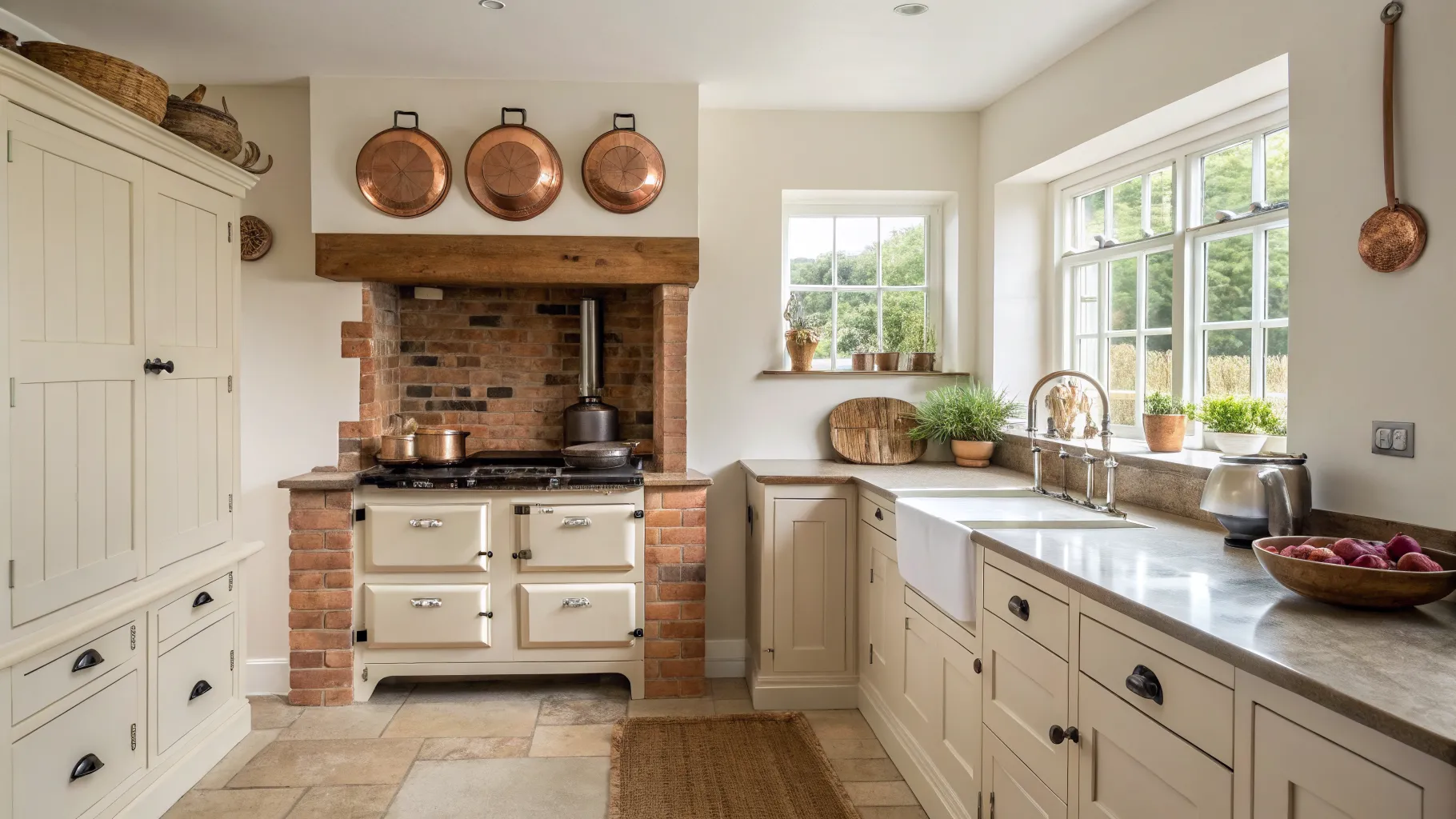
A range cooker deserves its own thought here: a dedicated downlight over the hob top means you can see into the pans. If you are still choosing your cooker, our range cooker buying guide covers the models worth the money.
Accent light: where the character comes from
Accent lighting is not strictly necessary for cooking, but it is what makes a kitchen look considered rather than purely functional. LED strips inside glass-fronted cabinets or under open shelving throw a warm glow around displayed crockery and glassware. Plinth lighting at floor level gives a soft wash that is lovely last thing at night. Used sparingly, accent light is the difference between a kitchen that works and one that also feels like a room you want to be in.
Colour temperature and finish
Two details make or break the mood:
- Stick to warm white, 2700K to 3000K. Cooler, bluer light (4000K and up) reads as clinical and hard in a home kitchen, especially a country one. Warm white flatters wood, cream cabinetry and natural stone.
- Choose your metal finish deliberately. Aged brass, warm gold and copper have moved firmly into the mainstream for pendants and fittings, and they sit far better in a country kitchen than cold chrome.
Aim for consistency across your fittings, and check that any dimmable LEDs are paired with a compatible dimmer, or they will flicker and buzz.
Plan it before the walls go up
The most important practical point: finalise your lighting plan at the first-fix stage, while the walls are still bare and the electrician can run cables anywhere. Retrofitting under-cabinet strips or a new pendant circuit after the plaster and tiling are done is disruptive and expensive. Sketch where every light and switch goes before the wiring starts.
Kitchen electrical work is notifiable under the Building Regulations, so use a registered electrician and keep the certificate. The official Part P guidance explains what needs signing off. For how lighting fits the wider room, see our kitchen colour ideas for pairing paint with light.
Frequently asked questions
What are the best kitchen lights for a UK kitchen? The best setup combines three layers: recessed LED downlights for ambient light, under-cabinet strips and island pendants for task light, and cabinet or plinth strips for accent. No single fitting does all three jobs well.
What colour temperature should kitchen lights be? Warm white, between 2700K and 3000K. Cooler light around 4000K and above looks clinical in a home kitchen, whereas warm white flatters wood, cream units and natural stone.
How high should pendant lights hang over a kitchen island? Roughly 700 to 800mm above the worktop surface. That gives bright, focused light for prep without the fittings blocking your eyeline across the room.
Do I need under-cabinet lighting? It is the most useful task light you can fit. Ceiling lights cast your own shadow onto the worktop as you work; under-cabinet strips light the surface directly and remove that shadow, so if you add only one task layer, make it this.
When should I plan my kitchen lighting? At the first-fix stage, before plastering and tiling, while the electrician can still run cables freely. Adding circuits later means cutting into finished walls, which is far more disruptive and costly.
The bottom line
Great kitchen lights are not about one clever fitting, they are about layering: dimmable downlights for ambient light, under-cabinet strips and island pendants for task light, and a little accent light for warmth. Keep everything warm white, choose a finish that suits a country kitchen, and above all plan it before the walls close up. Do that and the same room will work as a bright kitchen by day and a soft, welcoming space by night.