Installation, Kitchen Fit and the Country Kitchen
Carbon Monoxide Alarm Cooker Regulations: Wales Differs

By the Hill & May team
Updated 2026
The carbon monoxide alarm cooker regulations are simpler than they look once you know which kind of cooker you have. In England, a gas cooker is the one combustion appliance a rented home does not need a carbon monoxide (CO) alarm for. An oil-fired or solid-fuel range cooker is not exempt: if it sits in a room used as living accommodation, that room needs an alarm. Wales goes further and includes gas cookers. Scotland exempts appliances used solely for cooking, which can catch a range cooker that also heats the water.
Below is what each set of rules requires, what applies to owner-occupiers fitting a new range, and where to put the alarm so it works.
The short answer by cooker type
| Your cooker | England (rented homes) | Wales (rented homes) | Scotland (all homes) |
|---|---|---|---|
| Electric or induction range cooker | No alarm needed | No alarm needed | No alarm needed |
| Mains gas cooker, hob or dual fuel range | Exempt | Alarm required | Exempt if used solely for cooking |
| LPG cooker plumbed to a fixed supply | Exempt | Alarm required | Exempt if used solely for cooking |
| Oil-fired range cooker (AGA, Rayburn, Esse style) | Alarm required | Alarm required | Required if it also heats the home or water |
| Wood or multi-fuel range cooker | Alarm required | Alarm required | Required if it also heats the home or water |
An electric AGA or electric range cooker burns nothing, so no CO rule applies to it. A dual fuel range cooker has a gas hob, which is enough to bring it under the gas rules.
England: the Smoke and Carbon Monoxide Alarm rules
Since 1 October 2022 the Smoke and Carbon Monoxide Alarm (Amendment) Regulations 2022 have required landlords in England, private and social, to make sure a carbon monoxide alarm is fitted in any room used as living accommodation which contains a fixed combustion appliance, excluding gas cookers. Before that date the rule only covered solid fuel appliances in private lets.
What this means in a let kitchen:
- A gas range cooker on its own does not trigger the alarm duty. The cooker must still be in the annual gas safety check if you supplied it, which we cover in landlord gas safety checks and the cooker.
- An oil-fired range cooker is a fixed combustion appliance and is not a gas cooker, so the kitchen needs an alarm. The same goes for a wood-burning or multi-fuel range.
- A gas boiler in the kitchen triggers the duty in that room, whatever kind of cooker sits next to it.
Landlords must also repair or replace an alarm once told it is faulty, and check alarms are working on the first day of each new tenancy. A council that believes a landlord is in breach must serve a remedial notice; failing to comply within 28 days can lead to a civil penalty of up to £5,000. The government’s landlord and tenant guidance on the regulations sets out the detail.
Wales: gas cookers are included
Wales took a different route. Under the Renting Homes (Fitness for Human Habitation) (Wales) Regulations 2022, the landlord must ensure a carbon monoxide alarm in repair and proper working order is in each room which contains a gas appliance, an oil-fired combustion appliance or a solid fuel burning combustion appliance. The regulations define a gas appliance as one designed for heating, lighting, cooking or other purposes. Cooking is named, so a fixed gas cooker counts.
Two kinds of gas appliance fall outside the Welsh definition: a portable or mobile appliance supplied with gas from a cylinder, and an appliance the tenant (the contract holder) is entitled to take away. A tenant’s own freestanding cooker may therefore not trigger it, but a gas range the landlord installed does. A home without a required alarm is treated as unfit for human habitation, which is a stronger consequence than the English fine regime.
Scotland: solely-for-cooking appliances are exempt
Scotland’s rules apply to every home, owned or rented, through the tolerable standard. The Scottish Government’s guidance requires CO detectors in all rooms with a fixed combustion appliance, excluding an appliance used solely for cooking, and in rooms a flue passes through. Its notes say plainly that a detector is not required for a gas cooker or hob.
The words “solely for cooking” matter for range cooker owners. An oil-fired or solid-fuel range that also runs the central heating or heats the hot water is not used solely for cooking, so the room needs a detector. A cooking-only range cooker would fall within the exemption on the guidance’s wording, though fitting an alarm anyway costs little.
Owner-occupiers: Building Regulations on a new installation
If you own your home in England, the rental rules do not apply to you, but Building Regulations do when a fixed combustion appliance is installed. The October 2022 edition of Approved Document J says a carbon monoxide alarm should be fitted when installing fixed combustion appliances that burn solid fuels, gas (excluding gas appliances used solely for cooking) and oil, in new homes and when a new or replacement appliance goes into an existing home.
So a new oil-fired range cooker or wood-burning range in an owner-occupied house in England should come with an alarm, and the installer (an OFTEC engineer for oil, or a HETAS installer for solid fuel) will normally fit or specify one as part of the job. A new gas range cooker used only for cooking does not need one under Approved Document J. Our guide to Defra-exempt wood-burning range cookers and LPG and oil range cookers off the grid cover those installations in more detail.
Where to put a CO alarm near a range cooker
Approved Document J’s placement guidance is the most useful rule set in practice, and it is close to what Scotland’s guidance says too:
- Same room as the appliance.
- On the ceiling, at least 300mm from any wall, or on a wall as high as possible (above any doors and windows) but not within 150mm of the ceiling.
- Between 1m and 3m horizontally from the appliance.
- Not in a cupboard or tucked in an enclosed space, and not directly above the hob or next to an extractor, where steam and grease cause false alarms and airflow can carry gas past the sensor.
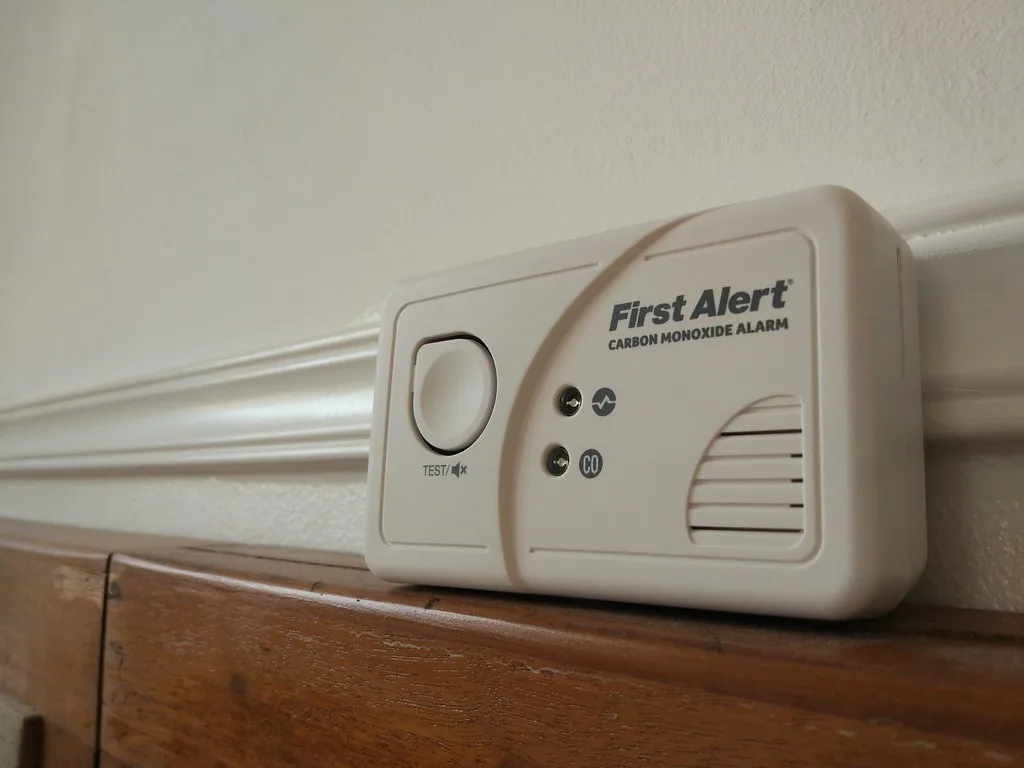
Alarms should meet BS EN 50291. For new installations Approved Document J asks for a battery alarm whose battery lasts the working life of the alarm, with a warning when that life is ending, or a hard-wired mains alarm (not a plug-in) with a sensor failure warning. Most sealed 10-year battery alarms sold in the UK meet that description; check the box for BS EN 50291 and replace the whole unit at the end of its life.
Does a gas cooker produce carbon monoxide?
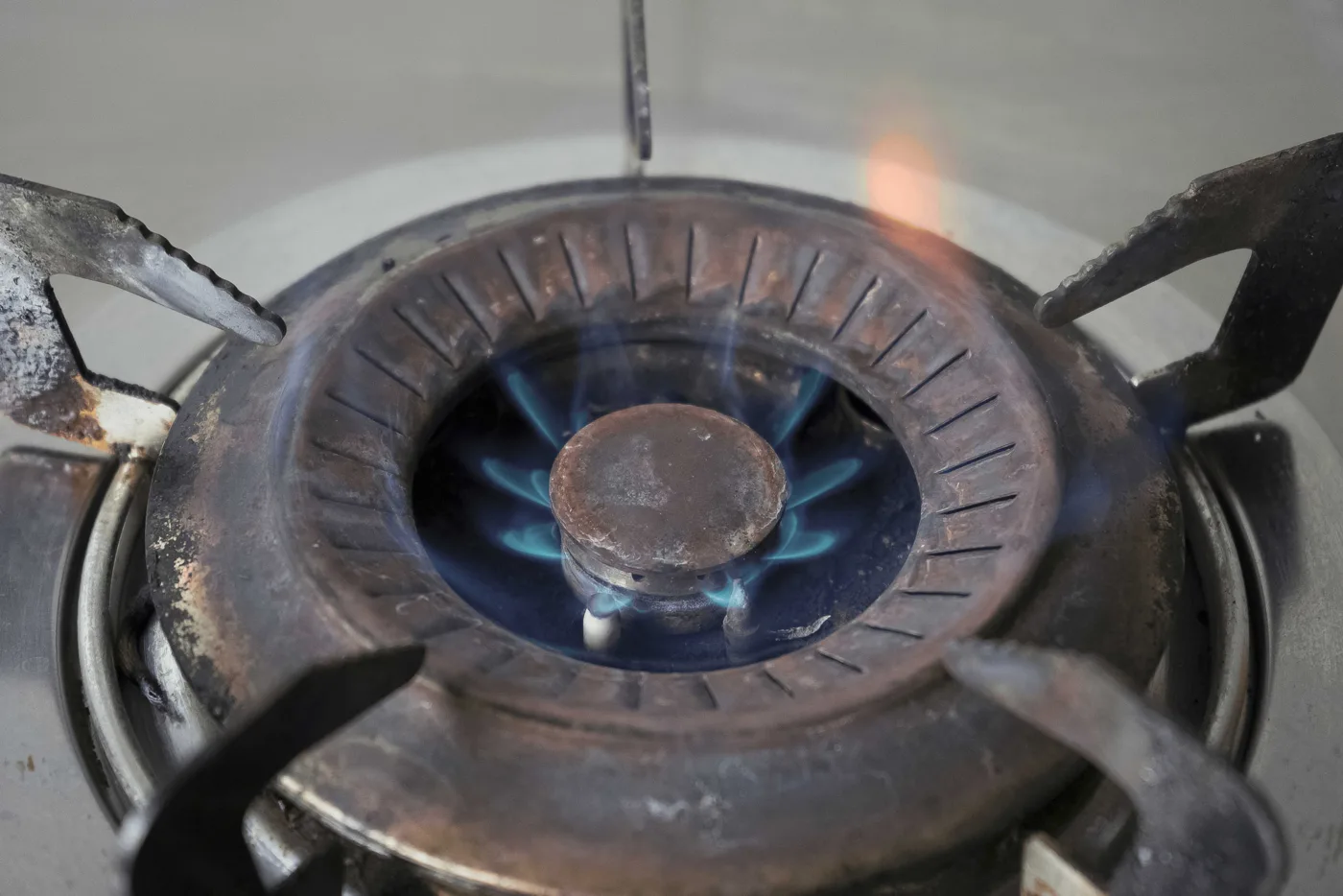
Any flame can produce carbon monoxide if combustion is poor. A correctly working gas hob burns with a crisp blue flame and produces very little. Lazy yellow or orange flames, soot marks on pans or the wall, and condensation in a poorly ventilated kitchen are signs to switch off and call a Gas Safe registered engineer. The exemption for gas cookers reflects the lower risk of an appliance used for short periods with the cook standing next to it; it does not mean a faulty cooker is safe. Many households fit an alarm anyway, which the law never forbids.
Frequently asked questions
Do I need a carbon monoxide alarm for a gas cooker? In England and Scotland, no, the regulations exempt gas cookers. In Wales, yes, if you are a landlord: the Welsh regulations include gas appliances used for cooking, apart from cylinder-fed portable appliances and ones the tenant can remove.
Does an oil-fired AGA need a carbon monoxide alarm? In a rented home in England or Wales, yes, because it is a fixed combustion appliance and not a gas cooker. In England, installing a new one in your own home should also include an alarm under Approved Document J.
Where should a CO alarm go in a kitchen with a range cooker? In the same room, on the ceiling at least 300mm from a wall or high on a wall but not within 150mm of the ceiling, and between 1m and 3m horizontally from the cooker. Avoid fitting it right above the hob.
What is the fine for a landlord with no CO alarm in England? A council must first serve a remedial notice. If the landlord does not comply within 28 days, the council can impose a penalty of up to £5,000.
Does an electric range cooker need a carbon monoxide alarm? No. An electric or induction range cooker burns no fuel, so none of the UK carbon monoxide alarm rules apply to it.
Do owner-occupiers have to fit a carbon monoxide alarm? In England only when a new or replacement fixed combustion appliance (other than one used solely for cooking) is installed. In Scotland every home must meet the tolerable standard, which includes CO detection for fixed combustion appliances.
Sources
- GOV.UK, Smoke and Carbon Monoxide Alarm (Amendment) Regulations 2022: guidance for landlords and tenants.
- The Renting Homes (Fitness for Human Habitation) (Wales) Regulations 2022, regulation 5.
- Scottish Government, tolerable standard guidance: satisfactory fire and carbon monoxide detection (June 2023).
- Department for Levelling Up, Housing and Communities, circular letter on the 2022 amendments to Approved Document J.