Range Cooker Buying Guides
Best 110cm Range Cookers for a Big Family Kitchen
By the Hill & May team
Updated 2026
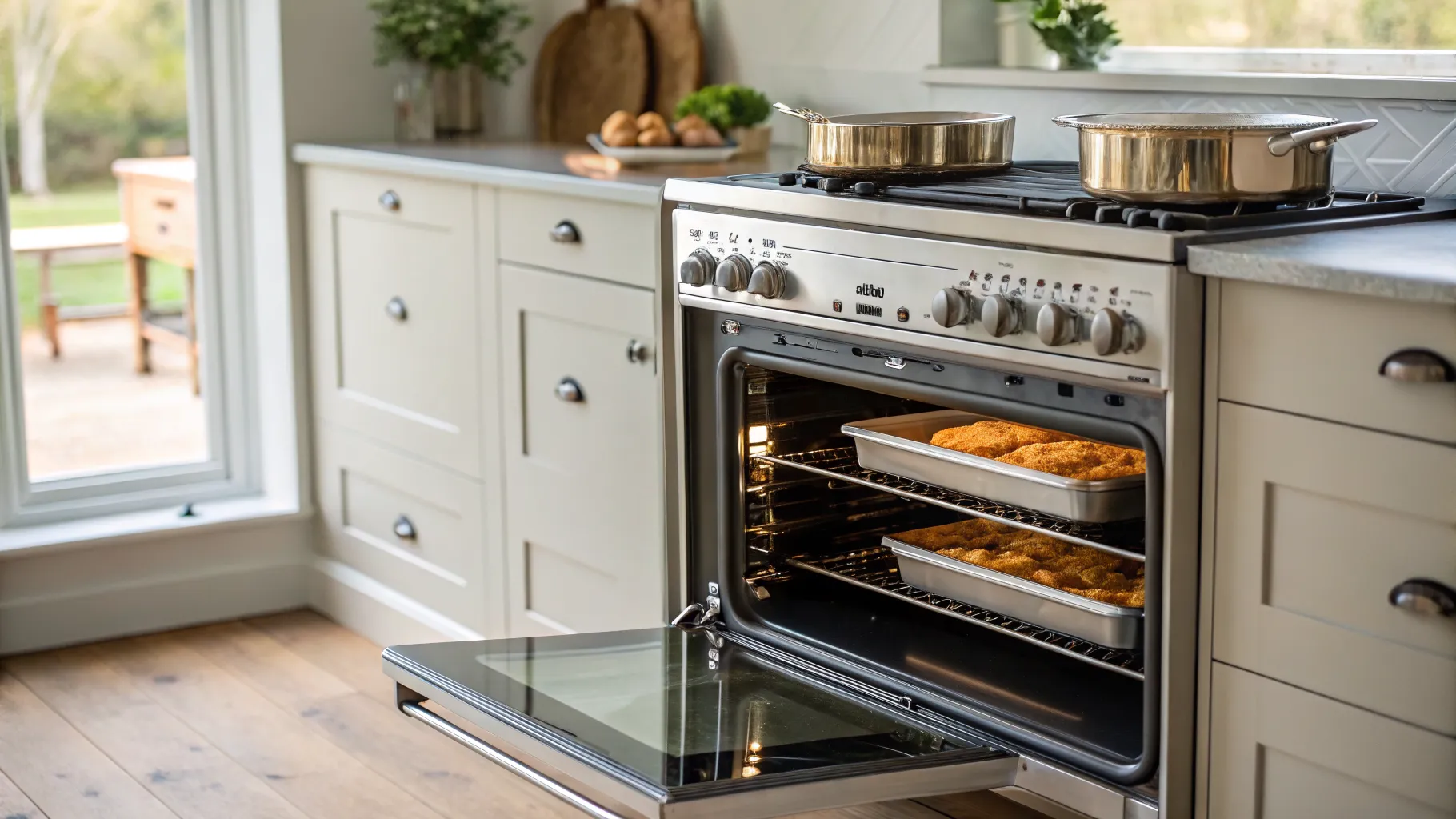
A 110cm range cooker is the largest standard size you can buy, and at this width the decision stops being about whether it will fit and starts being about how you actually cook. Feeding eight people on a Sunday is a different job from doing a midweek roast for four, and the layouts that win for one can disappoint at the other. The biggest mistake we see in big-kitchen buying is assuming more cavities always means more room. It often means the opposite: four small ovens instead of two generous ones, and a Christmas turkey that will not slide in.
This guide compares the 110cm models worth your shortlist in June 2026, with real specifications checked against manufacturer and specialist-retailer pages, and it is built around the question that thin retailer listings skip: which one suits a household that genuinely cooks at scale.
The single thing that catches big-family buyers out
Owners on forums repeatedly report the same regret. Someone buys a wide range with several burners and four cavities, then finds at Christmas that no individual oven is tall or deep enough for a large bird in its tin. Splitting the interior into more compartments shrinks each one. If you batch-cook, roast large joints, or do the full festive spread, you want at least one tall, single cavity, not a clever grid of small ones.
So our shortlist separates into two camps:
- Twin large ovens (roughly 73 to 80 litres each): best for big roasts and large tins. Two real ovens you can fill.
- Multi-cavity (three or four ovens): useful for cooking several different dishes at once at controlled temperatures, less good for one enormous tray.
Neither is wrong. Match it to how your kitchen runs on its busiest day.
The shortlist at a glance
| Model | Fuel | Oven layout | Hob | Energy | Best for |
|---|---|---|---|---|---|
| Stoves Richmond Deluxe 110DF | Dual fuel | Four cavities (Quad Oven) | 7 gas burners, 4.0 kW PowerWok | A | Most ovens for the money |
| Belling Cookcentre 110DF | Dual fuel | Two ovens + grill + storage | 7 gas burners, 4 kW wok | A | Best value mid-market |
| Rangemaster Professional Plus 110 | Multi-fuel | Twin 73 L fan ovens + drawer | 5 zones, gas/ceramic/induction | A | Large roasts, twin big cavities |
| Rangemaster Nexus SE 110 Induction | Induction | Main 79 L + second 79 L + slow-cook | 5-zone induction | A | Premium induction |
| Falcon 1092 Deluxe | Dual fuel | Twin 80 L ovens + grill + drawer | 5 burners, 5 kW central | A | Serious, heavy-duty cooking |
| AGA Masterchef Deluxe 110 | Gas or induction | Two 79 L ovens + grill + slow-cook | 5-zone induction or 5 gas | A | Premium brand, multi-cavity |
Capacity figures vary between retailers for some models, so treat the table as a layout guide and confirm the exact litres for the specific colour and fuel variant before you buy.
Stoves Richmond Deluxe 110DF: most ovens for the money
If your busiest cooking involves several dishes at different temperatures rather than one giant tin, the Richmond Deluxe is hard to beat on sheer flexibility. Its Quad Oven gives you four cavities: a multifunction main oven with 13 functions including AirFry, bread proving and a TrueTemp digital thermostat, an Equiflow fanned second oven, a conventional oven with a Maxi-Grill, and a dedicated slow-cook oven. That is a lot of independent cooking for the price bracket.
The hob is a seven-burner gas top with a 4.0 kW PowerWok, so it has the firepower for a full hob of pans. Total capacity is quoted at around 196 litres depending on the source and colour, and the energy rating is A. There is a five-zone induction sibling, the Richmond Deluxe S110EI, if you prefer to lose the gas. Just remember the caveat above: four cavities means each one is smaller than a single big oven, so this is a multi-dish range first and a large-bird range second.
Belling Cookcentre 110DF: best value
For a household that wants twin ovens, a separate grill and proper burner power without paying premium money, the Cookcentre 110DF is the sensible pick. You get a fanned main oven with AirFry-style functions, a conventional second oven, a separate grill and a storage compartment, plus a seven-burner gas hob with a 4 kW wok burner. Belling lists it with a three-year parts and labour warranty, which is longer than some pricier rivals offer.
One figure to check: Belling’s own spec sheet states 157 litres total, while some older retailer listings claim a higher number. Confirm the current figure on the Belling specification before you commit, because the difference matters if oven room is your priority. It is also worth checking stock, as some retailers now list this model as run-out.
Rangemaster Professional Plus 110: built for big roasts
This is our pick for the large-family kitchen where roasting comes first. The Professional Plus gives you two large fanned electric ovens, listed by Rangemoors at 73 litres on the left and 73 litres in the tall right-hand cavity, plus a 22-litre storage drawer and a dual-circuit electric grill on telescopic rails. Two genuinely big ovens you can fill with large tins is exactly what the turkey-fit problem demands.
The hob comes as gas (with a multi-ring burner and wok cradle), ceramic or induction across five zones, so you can spec it to taste. It is rated A and comes in Black, Cranberry, Cream and Stainless Steel. If you want the same large-cavity thinking with full induction, look at the Nexus SE 110 instead, which pairs a 79-litre main and 79-litre second oven with a dedicated slow-cook oven.
Falcon 1092 Deluxe: for the cook who means it
The Falcon is the heavy-duty option. Twin ovens at 80 litres each (a multifunction main on the left, a fanned cavity on the right), a dual-circuit roll-out electric grill, a storage drawer, and a hob of five gas burners topped by a 5 kW central burner. The build is unapologetically solid: stainless side panels, weighty knobs and traditional-style doors. It sits at the premium end and carries the brand’s reputation for longevity. If you cook seriously and often, it earns its place.
Dual fuel, induction or ceramic at 110cm
At this width the default is dual fuel: a gas hob over electric fan ovens, which most keen cooks prefer for hob control. Induction is the growing alternative, and plenty of gas owners say afterwards they wish they had switched for the cleaning alone. The trade-offs are real: induction usually costs more, needs the right pans, and at 110cm it draws enough power that you should plan for a dedicated high-amperage circuit. Ceramic sits in the middle on price.
There is no universally correct answer. If you cook on a flame and love it, stay with gas. If a wipe-clean surface and precise simmering matter more, pay for induction. Our range cooker buying guide covers the fuel decision in more depth, and if you are still unsure the width is right, what size range cooker do I need walks through 90cm against 110cm honestly.
Installation and the practical bits
A 110cm range is a serious appliance to get into a kitchen, so plan the install before you buy.
- Gas connection: any dual-fuel or gas model must be connected by a Gas Safe registered engineer. This is a legal requirement, not a recommendation. The Gas Safe Register cooker and hob guide explains why and what to check.
- Electrical supply: induction models need a dedicated high-amperage circuit, so factor in an electrician.
- Ventilation and clearances: leave the manufacturer’s gaps at the sides and rear, and check the door-swing clearance in a busy kitchen where people pass behind the cook.
- Delivery access: these cookers are heavy. Measure doorways, corridors and any turns before delivery day.
How many people does each layout actually feed
If you regularly cook for six or more and roast large joints, prioritise a twin-oven model with cavities of 73 litres or more (Professional Plus, Nexus SE, Falcon). If you cook lots of separate dishes for a household that grazes at different times, a multi-cavity range like the Stoves Richmond gives you more independent temperature zones. The seven-burner gas tops on the Stoves and Belling suit anyone who routinely runs a full hob of pans at once.
Stepping down a size is a fair question too: if your roasting tins are modest, our best 100cm range cookers guide may save you both money and kitchen space, and the best 90cm range cookers page covers the most common width if 110cm feels like more than you need.
Frequently asked questions
How many ovens does a 110cm range cooker have? Most have two ovens plus a separate grill. Some models go further: the Stoves Richmond Deluxe 110DF has four cavities and seven hob burners, while twin-oven models like the Rangemaster Professional Plus and Falcon 1092 Deluxe give you two large ovens instead of several small ones.
Is a 110cm range cooker too big? It is the largest standard size, designed for big family kitchens, batch cooking and large feasts. It needs the floor space and the install access, so it only makes sense if you have the room and genuinely cook at scale. If you do not, a 90cm or 100cm model is usually the better fit.
Will a large turkey fit in a 110cm range cooker? Not automatically. The trap is buying a model with many small cavities; a turkey in its tin needs one tall, single oven. Twin-oven models with cavities of around 73 to 80 litres, such as the Rangemaster Professional Plus or Falcon 1092 Deluxe, are the safer bet for large birds.
Dual fuel or induction at 110cm, which is better? Dual fuel (gas hob, electric fan ovens) remains the default and suits cooks who want flame control. Induction costs more, needs compatible pans and a dedicated high-amperage circuit, but it is far easier to clean and simmers precisely. Both are widely available at 110cm, so choose by how you cook.
Which brands make the best 110cm range cookers? The names worth shortlisting in the UK are Rangemaster, Stoves, Belling, Falcon and AGA, with Smeg and Bertazzoni as premium alternatives. Belling tends to win on value, Rangemaster and Falcon on large-oven cooking, and Stoves on the sheer number of cavities for the money.