Buying Guides
Belfast Sink Buying Guide: Size, Cabinet, Waste, Tap and Care

By the Hill & May team
Updated 2026
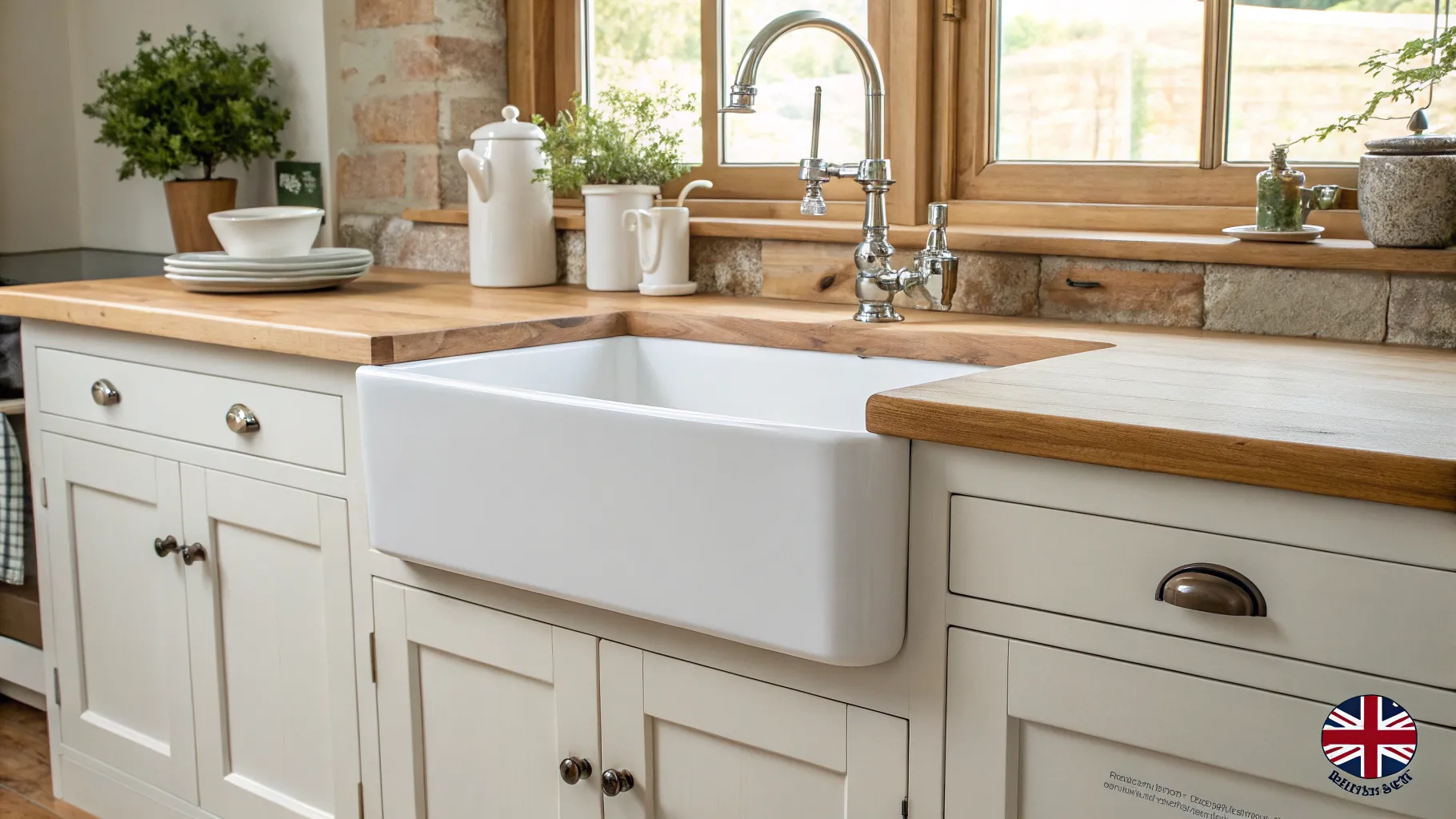
A Belfast sink is the deep, square-fronted ceramic sink that defines a country kitchen, and buying one is less about the bowl and more about everything around it. Order the wrong base cabinet, the wrong waste or the wrong tap and the sink itself becomes the easy part. This guide walks the whole purchase in order: the size, the cabinet that carries it, the waste it needs, the tap that suits it, the support its weight demands, and the care that keeps the glaze intact. It also clears up the single thing most pages get wrong, which is what actually separates a Belfast sink from a Butler sink.
Belfast or Butler: the difference is the overflow
The names get used interchangeably, and many retailers list a product as “Belfast/Butler” without comment. The real distinction is small but specific: a Belfast sink has a weir overflow, a slot at the back of the basin that drains excess water before it can spill over the front. A traditional Butler sink has no overflow at all.
The split comes from local water supply. Belfast had plenty of water, so an overflow that let a little drain away was no problem. London’s Butler sinks left it out because well water was scarce and nothing should be wasted. The shape followed the same logic. Traditional Belfast sinks tend to be deeper and narrower and will fit a 600mm base cabinet; traditional Butler sinks are shallower but wider and usually want an 800mm unit. Modern manufacturing has blurred this, so treat depth and overflow as your guides rather than the badge on the box.
Size and cabinet: get this pairing right first
The bowl size dictates the cabinet, and the cabinet has to be bought wider than the sink. The rule is straightforward: the base unit should be at least 50mm wider than the sink. A 600mm sink therefore wants a 650 to 700mm cabinet, not a 600mm one.
Common single-bowl widths run around 595mm and 600mm at the small end, and 795 to 800mm for the larger size, with extra-wide farmhouse models passing 900mm. Bowl depth is typically 200 to 225mm. Two clearances are worth marking out before anything is cut: allow 25 to 40mm behind the sink for the tap tails and plumbing, and set any worktop tap holes 40 to 60mm back from the sink edge so splashes clear the rim.
| Sink size | Base unit width | Typical empty weight | Tap and waste |
|---|---|---|---|
| 595 to 600mm single | 650 to 700mm | around 25 to 40kg | wall, worktop or bridge mixer; 90mm basket strainer waste |
| 795 to 800mm single | 850mm or wider | up to roughly 60kg (e.g. Shaws 800) | two-hole bridge mixer (180mm centres) or wall-mounted; 90mm waste |
| 800mm+ double | minimum 800mm, often 900mm | heaviest, varies by model | two waste outlets; bridge or wall-mounted mixer |
The Villeroy & Boch Farmhouse 80, for example, is a double-bowl Belfast that needs a minimum 800mm base unit. Size the cabinet to the sink you have actually chosen, not to a generic figure.
The handmade tolerance rule that saves worktops
Fireclay sinks are handmade and shrink as they fire, so finished dimensions can vary by up to two per cent from the listed size. Shaws of Darwen, the Lancashire maker that has produced these sinks since 1897, is open about this tolerance.
The practical consequence is one rule worth repeating: never cut your worktops or cabinets before the actual sink is on site and measured. Plan the kitchen around the catalogue dimensions, by all means, but make the final cuts only once the physical sink is in front of you. This single mistake is the most expensive one in a Belfast sink install, and most guides bury it.
Waste: a 90mm basket strainer, with or without the overflow
This is the part searchers ask about and most pages skip. A Belfast sink takes a 90mm basket strainer waste with a 3.5 inch outlet. It is usually supplied with an overflow spigot and a blanking plug, so the same waste works whether your sink has a weir overflow or not: fit the spigot for an overflow sink, fit the blank for a Butler with no overflow.
One detail matters when ordering: fireclay is thick, so the waste needs a long or extended bolt to reach through the base of the bowl. A standard-length waste bolt may not seat properly. Buy a waste sold for Belfast or fireclay sinks rather than a general kitchen one.
Taps: no holes, so you choose the mounting
Belfast sinks have no pre-drilled tap holes. The bowl is solid ceramic, so the tap mounts somewhere else: on the worktop behind the sink, on the wall, or as a bridge mixer that spans the back.
- Worktop-mounted mixer: drilled into the worktop behind the bowl. Keep it 40 to 60mm back from the rim for splash clearance.
- Bridge mixer: a classic Belfast pairing such as the Rangemaster Belfast bridge mixer. A two-hole bridge tap needs two holes drilled in the worktop, set about 180mm apart on centres.
- Wall-mounted bridge mixer: a bridge-style tap fixed to the wall instead. This is the cleanest look because it avoids drilling the worktop at all, which suits timber and stone surfaces you would rather not pierce. Wall-mounted bridge taps are sold by several British brands; if you want a worktop-free finish, ask for a wall-mounted version specifically, because many bridge taps are deck-mounted only.
Decide the mounting before the worktop is templated, because the hole pattern is part of the cut.
Weight and support: this needs a proper sink base
Weight is the install consideration people underestimate. A standard single-bowl fireclay sink runs roughly 25 to 40kg empty, more for a double, and a Shaws 800 model is around 60kg before you add water and washing-up. Fill it and the load climbs sharply.
That means a Belfast sink needs a purpose-built sink base unit designed to carry the load, not a standard cabinet with the front cut away. The unit takes the weight of the sink and its contents on a reinforced base or rails. If you are reusing a cabinet, check it is rated for a Belfast sink before trusting it.
Installation: sit-on or undermounted
There are two ways to set the sink. The traditional method is sit-on: the sink rests on top of the base unit with the front exposed, which is the look most people picture. The alternative is undermounting it to the worktop. For an undermount, the worktop is cut about 10mm larger than the bowl, the sink is sealed to the underside with sanitary silicone, and it is held by brackets or plates under the flange. Timber worktops used this way should be around 40mm thick to take the fixing and the weight without flexing.
Care: ceramic glaze chips and stains, so treat it right
Ceramic and fireclay look tough, and they are, but the glaze is not stainless steel. It can chip if something heavy lands on it, and it will pick up stains and marks from tea, hard-water spots and limescale. The cleaning routine is specific:
- Use hot soapy water for everyday cleaning. For limescale, a 50/50 mix of white vinegar and water works without harming the glaze.
- Avoid bleach, limescale removers and chemical drain cleaners. They etch the glaze over time, and an etched surface is what later chips.
- Run the cold tap first before pouring boiling water down the sink. Pouring boiling water straight onto cold ceramic risks thermal cracking; a few seconds of cold first protects it.
- If the glaze does chip, repair kits from Cramer or Porc-a-fix are made for ceramic sinks and can fix a chip without replacing the bowl.
Putting it together
Work in this order and the install goes smoothly: choose the sink size, buy a sink base unit at least 50mm wider and rated for the weight, order a 90mm basket strainer waste with a long bolt, pick the tap mounting before the worktop is templated, and make no final cuts until the physical sink is measured on site. Then look after the glaze and it will outlast most of the kitchen around it.
For more on heritage British makers and exact specs, Shaws of Darwen at shawsofdarwen.com is a useful reference point for fireclay tolerance and weight, and tap makers such as Rangemaster publish full dimensions for their Belfast bridge taps on their own product pages. Always check the spec sheet for the exact tap you choose before the worktop is drilled. If you are also planning the cooker side of the kitchen, see our range cooker buying guide and the what size range cooker do I need tool.
Frequently asked questions
What is the difference between a Belfast sink and a Butler sink? A Belfast sink has a weir overflow, a slot at the back of the basin that drains excess water before it spills over the front. A Butler sink has no overflow. Traditional Belfast sinks are deeper and narrower; Butler sinks are shallower and wider. In modern catalogues the names are often used interchangeably, so check for the overflow rather than relying on the label.
What size base unit do I need for a Belfast sink? The base unit should be at least 50mm wider than the sink, so a 600mm sink wants a 650 to 700mm cabinet. It must also be a purpose-built sink base rated to carry the weight, since a single fireclay bowl is roughly 25 to 40kg empty and an 800 model can reach around 60kg.
What waste does a Belfast sink need? A 90mm basket strainer waste with a 3.5 inch outlet. It is usually supplied with an overflow spigot and a blanking plug, so it suits a sink with or without a weir overflow. Because fireclay is thick, buy a waste with a long or extended bolt designed for Belfast sinks.
Do I need a special tap for a Belfast sink? Yes, because the bowl has no pre-drilled tap holes. The tap mounts on the worktop, on the wall, or as a bridge mixer. A two-hole bridge mixer needs holes about 180mm apart on centres; a wall-mounted bridge mixer keeps the worktop free of holes for a cleaner finish.
Can you pour boiling water into a Belfast sink? Run the cold tap first for a few seconds, then pour. Pouring boiling water onto cold ceramic can cause thermal cracking, so warming the glaze with cold water first protects it. As a rule, avoid bleach, limescale removers and drain cleaners, which etch the glaze and lead to chipping.
Single or double Belfast sink: which should I choose? A single bowl suits smaller kitchens and fits from a 650 to 700mm cabinet upwards. A double, such as the Villeroy & Boch Farmhouse 80, gives you a second bowl for rinsing or soaking but needs a minimum 800mm base unit and is heavier, so confirm your cabinetry and worktop run can take it before ordering.